
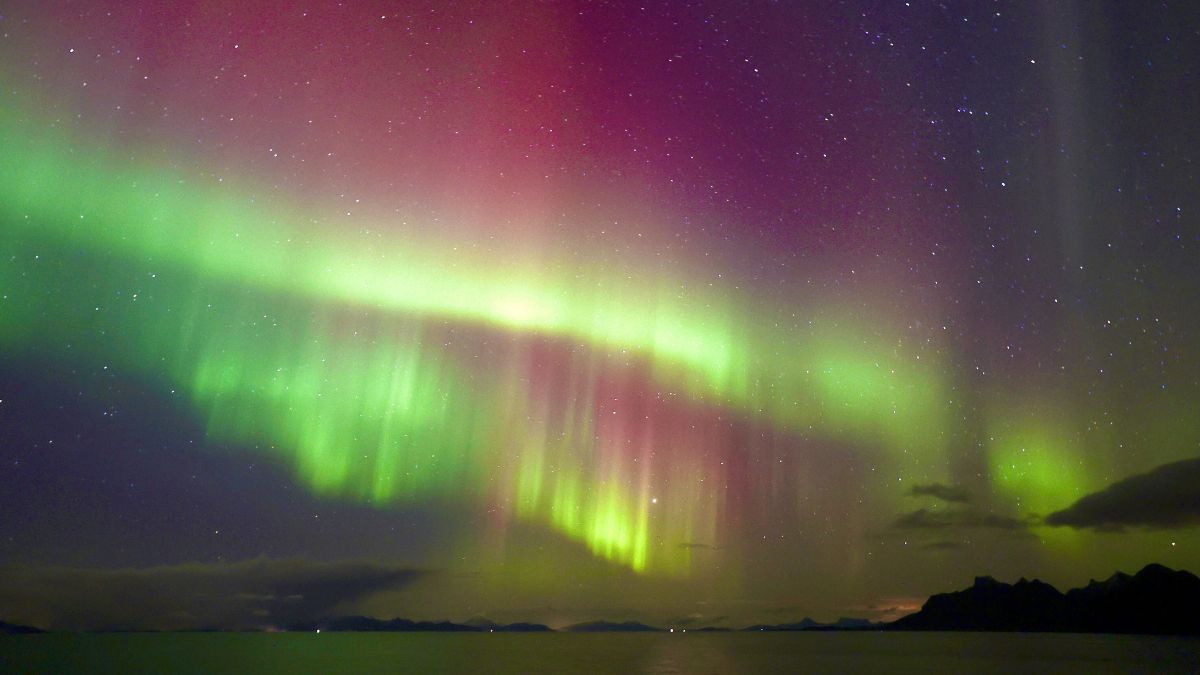
A significant space weather event is currently underway, promising stunning displays of the aurora borealis for skywatchers across multiple regions. The National Oceanic and Atmospheric Administration’s Space Weather Prediction Center (NOAA SWPC) has issued a Strong (G3) geomagnetic storm warning, following the arrival of a powerful solar eruption.
The Science Behind the Latest Solar Storm
The current surge in geomagnetic activity is the direct result of a Coronal Mass Ejection (CME) that erupted from the sun on October 8, 2026, and successfully impacted Earth on October 10. As these charged solar particles traveling on the solar wind collided with Earth’s magnetic field, they triggered a significant disturbance in the magnetosphere.
According to the latest real-time data, the geomagnetic field rapidly reached G3 (Strong) levels. During a G3 storm, the auroral oval expands significantly, pushing the Northern Lights much farther south than their usual Arctic and high-latitude boundaries.
Where to See the Aurora Borealis Tonight
Because of the heightened solar activity, the chances of seeing the aurora borealis are currently excellent for those in favorable locations. Depending on local weather conditions and cloud cover, the Northern Lights may be visible in:
- North America: Displays could be seen high overhead in Canada and Alaska, and may stretch across the northern tier of the United States. During a G3 event, the aurora can often be spotted on the northern horizon as far south as Illinois, Oregon, and Pennsylvania.
- Europe: Skywatchers in northern Scotland and Scandinavia have high chances of witnessing the auroral oval enhancement.
- Southern Hemisphere: A corresponding phenomenon, the aurora australis, may also be visible in southern New Zealand and similar geomagnetic longitudes.
More Than Just a Light Show: Potential Impacts
While the aurora borealis provides a breathtaking natural spectacle, geomagnetic storms of this magnitude can also have technological impacts. A G3 storm can cause intermittent disruptions to satellite communications and low-frequency navigation systems. It may also require minor voltage corrections in electric power grids, though widespread issues are uncommon at this level. High-frequency (HF) radio communications on the sunlit side of the Earth may also experience weak or minor degradation.
Tips for the Best Aurora Viewing Experience
If you are in the footprint of the forecast, here is how you can maximize your chances of catching the show:
- Get Away from City Lights: Light pollution is the biggest obstacle to seeing the aurora borealis. Head to a dark, rural location with a clear, unobstructed view of the northern horizon.
- Check the Weather: The aurora is happening high above the clouds. If your local sky is heavily overcast, you will not be able to see the lights, regardless of how strong the geomagnetic activity is.
- Be Patient: Auroral activity naturally ebbs and flows in substorms throughout the night. The most intense displays often occur in sudden bursts.
- Let Your Eyes Adjust: Give your eyes at least 20 to 30 minutes to adapt to the dark. Avoid looking at your bright smartphone screen while waiting.
As the sun continues through its 11-year solar cycle toward solar maximum, these magnificent displays of the aurora borealis are expected to occur with greater frequency. Keep an eye on local forecasts and space weather alerts to ensure you never miss a chance to witness the magic of the Northern Lights.