
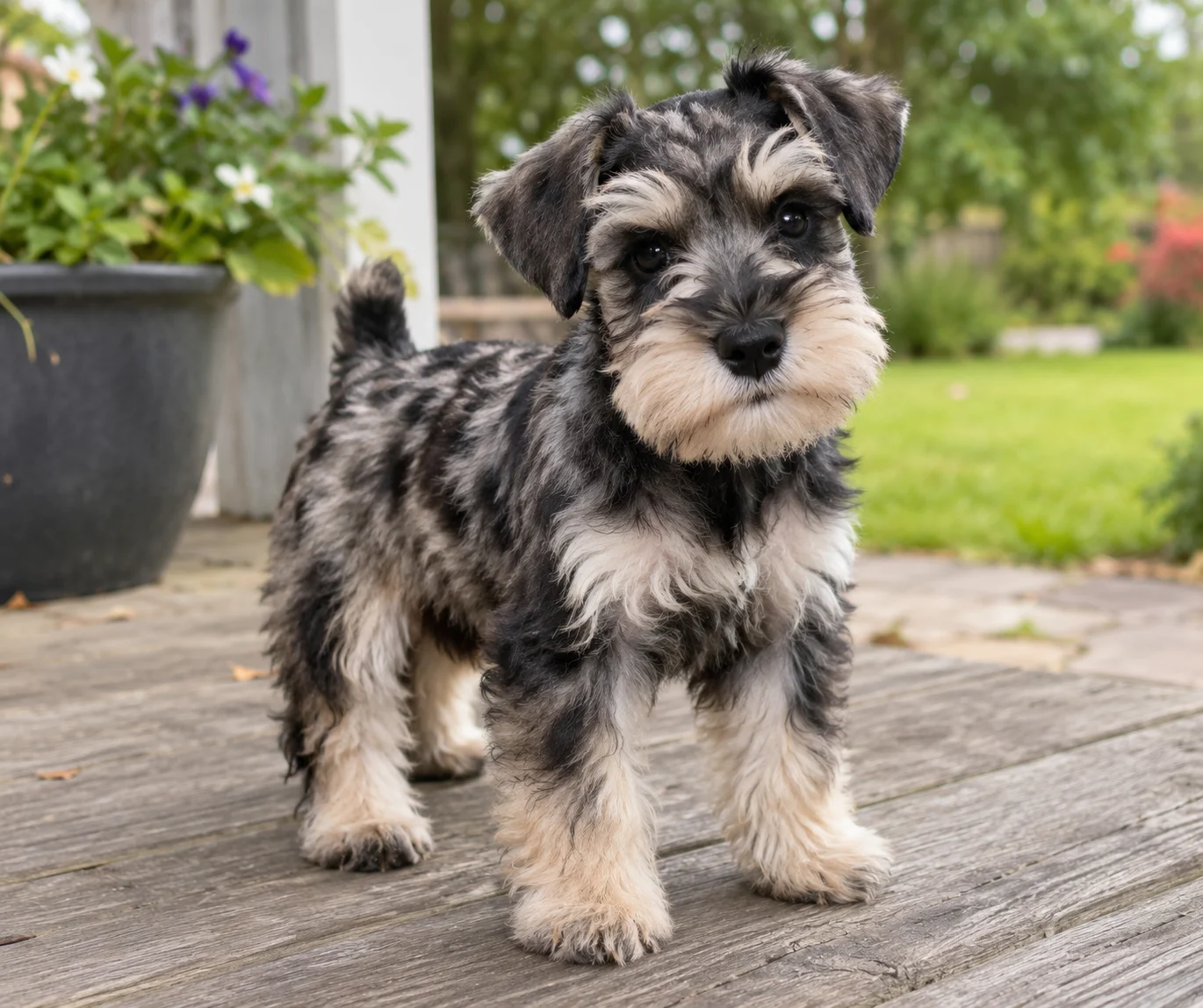
A unique-coated Miniature Schnauzer puppy can stand out for its distinctive coloring, textured fur, bushy eyebrows and signature beard. While the breed is best known for its salt-and-pepper appearance, Miniature Schnauzers also come in other recognized color patterns. Understanding these differences can help prospective dog owners choose a puppy responsibly and provide the right grooming and care.
The term “unique-coated” is a descriptive phrase rather than an official breed classification. A puppy may have an unusual-looking coat, but its color alone does not establish its pedigree, health or suitability for a particular home.
What Makes a Miniature Schnauzer Puppy’s Coat Unique?
Miniature Schnauzers have a double coat consisting of a relatively harsh, wiry outer layer and a softer, dense undercoat. Their distinctive facial furnishings include prominent eyebrows, a mustache and a beard, giving the breed its recognizable expression.
The combination of coat texture, color distribution and facial markings can make individual puppies look quite different from one another. Some have a strong contrast between dark and light hair, while others display a more blended gray appearance.
A puppy’s coat may also look different as it matures and develops its adult furnishings. Grooming methods can change the coat’s appearance, so prospective owners should not rely on a single puppy photograph to predict exactly how the dog will look as an adult.
Which Miniature Schnauzer Coat Colors Are Recognized in the United States?
Under the American Kennel Club’s breed standard, Miniature Schnauzers have three recognized colors: salt and pepper, black and silver, and solid black. These patterns have distinct visual characteristics.
- Salt and pepper: A mixture of dark and light hairs creates a gray appearance that can range from darker shades to lighter silver tones. The eyebrows, beard and leg furnishings may be lighter than the body.
- Black and silver: This pattern features a predominantly black coat with lighter markings, including the eyebrows, muzzle, chest and legs.
- Solid black: The coat is predominantly black, creating a uniform and striking appearance.
Different kennel organizations may have different color standards. For example, the United Kennel Club also recognizes white as an acceptable Miniature Schnauzer color. Buyers should therefore check the rules of the specific registry they intend to use rather than assuming that every organization follows the same standard.
Are Unusual Miniature Schnauzer Coat Colors Rare?
Some breeders advertise Miniature Schnauzer puppies using descriptions such as chocolate, liver, parti-colored or merle. These terms may refer to unusual coat appearances, but they are not additional colors recognized by the American Kennel Club’s Miniature Schnauzer breed standard.
An unusual color does not automatically mean that a puppy is unhealthy or that it cannot be a Miniature Schnauzer. However, appearance alone cannot verify breed ancestry, and marketing claims about rare colors should be evaluated carefully.
Responsible buyers should ask for registration details, pedigree information when available, photographs of the parents and documentation of relevant health testing. Claims that a coat color guarantees better health, exceptional temperament or greater breeding quality should be treated with caution.
How to Groom a Unique-Coated Miniature Schnauzer Puppy
Regular grooming is essential for maintaining the Miniature Schnauzer’s characteristic appearance. Although the breed generally sheds relatively little, its coat still requires consistent care to prevent tangles and keep the skin clean.
Owners should introduce grooming gradually while their puppy is young. Gentle brushing, careful handling of the beard and legs, and positive reinforcement can help make future grooming appointments less stressful.
- Brush regularly: Brush the coat several times a week, paying special attention to the beard, legs and areas where tangles can develop.
- Schedule professional grooming: Many pet owners arrange professional grooming approximately every five to eight weeks, depending on the coat, haircut and maintenance needs.
- Keep the beard clean: Food and moisture can collect around the muzzle. Wipe the beard as needed and allow it to dry properly.
- Check the ears and nails: Inspect the ears regularly for debris and excess wax, and trim the nails as needed, often about monthly.
- Use suitable products: Choose gentle, dog-specific grooming products and ask a veterinarian or experienced groomer about any unusual skin irritation or changes in coat condition.
Owners interested in preserving the traditional harsh outer coat may ask a professional groomer about hand-stripping. Clipping is also commonly used for pet Miniature Schnauzers, although it can affect the texture and appearance of the coat over time.
What Should Buyers Check Before Choosing a Puppy?
A distinctive coat may attract attention, but health, temperament and responsible breeding practices should remain the priorities when choosing a Miniature Schnauzer puppy.
Prospective owners should seek a breeder who can answer questions about the puppy’s upbringing, veterinary care, parents and relevant inherited health risks. Ask to review health-screening records for the parent dogs and discuss breed-appropriate genetic testing with a veterinarian.
It is also helpful to see where the puppies are raised and observe their behavior. Healthy, well-cared-for puppies should be alert and responsive, with no obvious signs of illness. Persistent coughing, unusual lethargy, discharge from the eyes or nose, or visible skin problems warrant further veterinary assessment.
Buyers should request clear information about the puppy’s age, vaccination and deworming history, veterinary examinations, registration status and any written health agreement. Avoid making a decision based solely on color, social media photographs or claims that a puppy is exceptionally rare.
Is a Miniature Schnauzer a Good Family Companion?
Miniature Schnauzers are generally alert, intelligent and energetic companion dogs. They can adapt to a range of living environments when their exercise, training, enrichment and social needs are met.
Early socialization and reward-based training help puppies become more comfortable with people, everyday sounds, grooming and new surroundings. Regular walks and supervised play provide physical activity, while interactive games and training exercises help keep their minds engaged.
The breed’s relatively low-shedding coat may appeal to some households, but low shedding does not mean a dog is completely hypoallergenic. People with dog allergies can react to allergens found in a dog’s dander and saliva, regardless of coat color or texture.
The Bottom Line
A unique-coated Miniature Schnauzer puppy can be an appealing companion because of its distinctive color pattern, wiry coat and expressive facial furnishings. However, buyers should understand the difference between recognized breed-standard colors and descriptive marketing terms.
For a successful adoption or purchase, prioritize documented health information, responsible breeding, sound temperament and a grooming routine that suits the dog. A puppy’s coat can make it visually distinctive, but its long-term well-being depends on much more than appearance.