
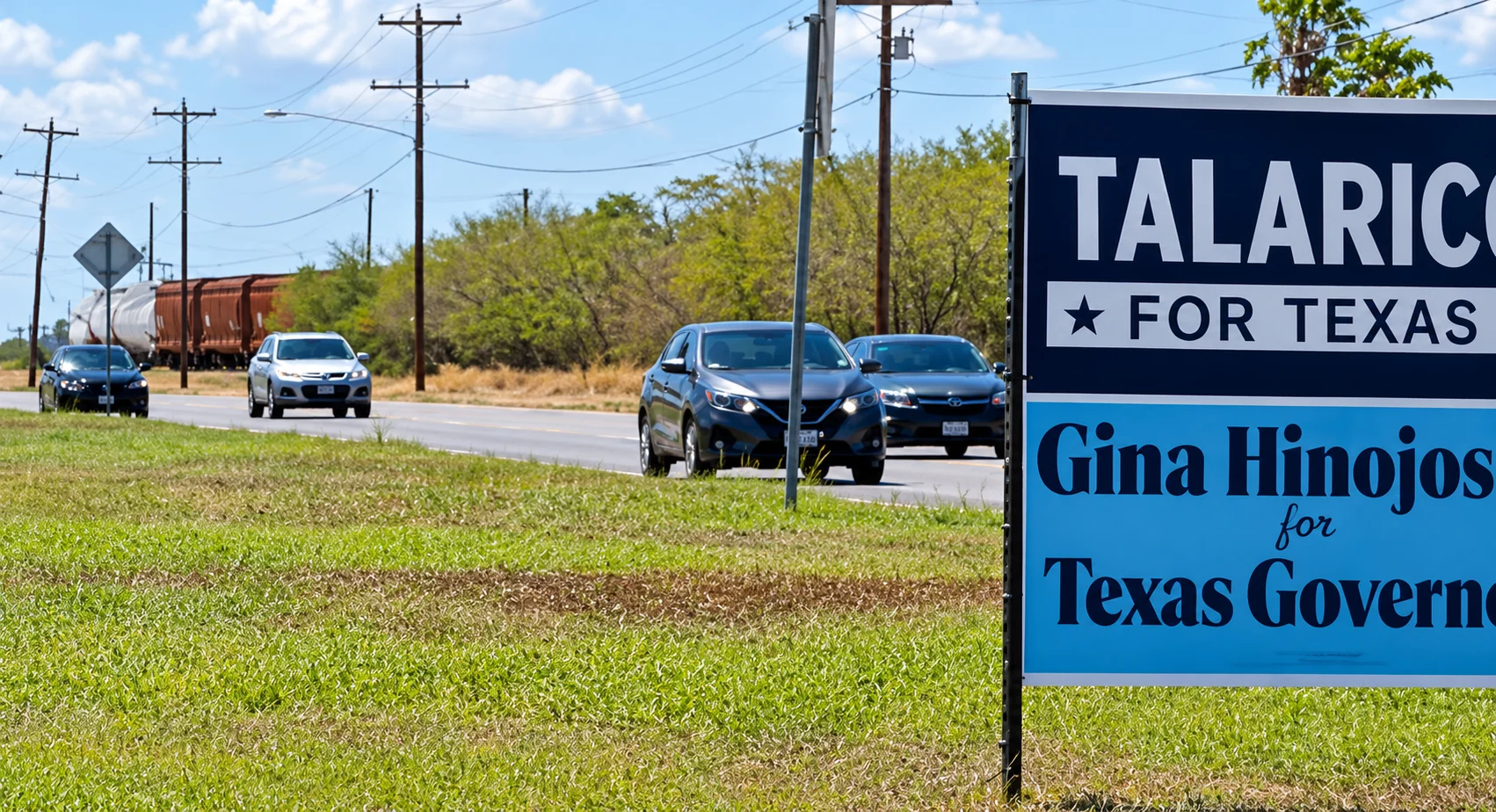
The political significance of the Texas-Mexico border has grown since the 2024 presidential election, when Trump made substantial advances in South Texas, an area where Democratic candidates had historically enjoyed strong support. His performance demonstrated that Hispanic voters cannot be treated as a single political constituency and that immigration, economic conditions, public safety and dissatisfaction with established political leadership can reshape voting patterns.
With early voting in Texas scheduled to begin on October 19 and Election Day set for November 3, campaigns are entering a decisive stage. The contest for the state’s U.S. Senate seat is attracting particular attention because it could influence the balance of power in Washington and determine how much legislative support Trump receives during the final two years of his presidency.
Trump’s 2024 gains changed the political map along the border
In 2024, Trump carried 14 of the 18 Texas counties located within approximately 20 miles of the U.S.-Mexico border, according to election results reported by Texas news organizations. His performance represented a substantial expansion of Republican support compared with previous presidential elections, particularly in the Rio Grande Valley.
Cameron County, which includes Brownsville and has a population that is roughly 90% Hispanic, illustrated the extent of the political change. Trump won the county by more than five percentage points in 2024, reversing a Democratic advantage in 2020 and a considerably larger Democratic margin in 2016.
The results challenged the long-standing assumption that demographic change would eventually make Texas more favorable to Democrats. Although Hispanic voters have often supported Democratic candidates, their political priorities vary by community, generation, employment, religious beliefs and personal experience. Many voters are motivated by economic opportunity, local concerns and perceptions of government performance rather than party identity alone.
Immigration enforcement was an important part of the political environment surrounding the 2024 election. Trump built his campaign around tougher border policies, while some voters and local officials expressed frustration with the previous federal administration’s handling of unauthorized crossings and the pressure placed on border communities.
For residents of South Texas, however, the border is not simply an issue of national security or immigration policy. It is also central to employment, international trade, transportation, agriculture, tourism and family life. Communities that maintain close economic and social relationships with Mexico can have concerns that differ significantly from those of voters in distant parts of the state.
That combination creates a difficult political challenge for both parties. Republicans have demonstrated that a strong emphasis on border enforcement can attract voters in areas once considered reliable Democratic territory. Democrats, meanwhile, have opportunities to compete by addressing household expenses, employment, access to health care, education and the economic consequences of federal policies.
The Senate contest puts the Republican coalition to the test
The 2026 Texas Senate race has become a closely watched contest between Republican Ken Paxton, the state’s attorney general, and Democratic state Representative James Talarico. Libertarian candidate Ted Brown is also running in the general election.
Paxton represents the conservative political movement closely associated with Trump and has the backing of the president. His campaign provides Republicans with an opportunity to mobilize voters who support stricter immigration enforcement, conservative cultural positions and continued Republican leadership in Washington.
His candidacy also presents challenges. Paxton’s political record has been marked by legal and ethical controversies, including his 2023 impeachment by the Texas House of Representatives. The Texas Senate acquitted him, allowing him to remain in office. Those controversies have continued to feature in political debate and may affect how voters outside the Republican base evaluate his candidacy.
Talarico has sought to build a broader coalition by emphasizing affordability, economic opportunity, education and concerns about the influence of wealthy donors in politics. His campaign has worked to reach voters beyond the state’s major metropolitan areas, including communities along the border and in rural regions where Republicans have traditionally been stronger.
Recent statewide polling compiled by the University of Texas at Austin’s Texas Politics Project has shown Talarico with relatively narrow leads in several surveys conducted from September into October. The reported margins have generally ranged from two to six percentage points, with individual surveys carrying their own margins of sampling error.
Those numbers indicate that the race is competitive, but they do not establish that Democrats have secured an advantage in South Texas or among Hispanic voters specifically. Statewide polls measure a broad electorate, and local voting patterns can differ from the overall results. The remaining campaign period, turnout and the ability of each candidate to persuade undecided voters could all influence the final outcome.
The Senate race also has consequences beyond Texas. Republicans currently hold a majority in the Senate, and Democrats are seeking to gain seats in the November elections. A Democratic victory in Texas would be a significant political breakthrough, while a Republican win would reinforce the party’s position in one of the country’s largest states.
Why border voters may not follow a single political direction
One of the central questions heading into November is whether Trump’s gains among border voters represent a durable realignment or a response to the specific circumstances of the 2024 presidential election.
Republican organizers have spent several election cycles building local networks in South Texas, recruiting candidates and investing in voter outreach. That work has helped the party compete more effectively in communities where Democrats previously benefited from established political relationships and strong local organizations.
At the same time, support for a presidential candidate does not automatically translate into support for every candidate from the same party. Local election results have shown that some communities can vote Republican in a presidential contest while continuing to elect Democratic officials to other offices. Personal relationships, local reputations and the practical responsibilities of individual officeholders can influence those decisions.
This distinction is particularly important in border counties, where voters may have strong views about immigration enforcement but also depend on businesses, agricultural operations and cross-border commerce. Policies that appeal to voters concerned about unauthorized migration may raise different questions for residents whose livelihoods depend on predictable trade, available workers and functioning ports of entry.
Economic concerns could prove equally important. Household budgets, housing costs, fuel prices, wages and access to reliable health services affect voters across party lines. Candidates who can connect national political debates to the daily experiences of local residents may be better positioned to persuade voters who are dissatisfied with one party but remain uncertain about its alternative.
For Democrats, the challenge is to rebuild trust without assuming that Hispanic voters will automatically return to their traditional voting patterns. That requires sustained engagement, credible local candidates and messages that address both immigration and economic opportunity. Republican candidates face a different challenge: converting presidential support into consistent backing for down-ballot candidates while demonstrating that their policies deliver tangible results for local communities.
What to watch as Election Day approaches
The final weeks of the campaign will provide several indications of how the Texas political landscape is developing. Voter participation during the October 19-30 early-voting period will offer an initial measure of enthusiasm, although early turnout figures alone will not establish which party has the advantage. Election officials and campaigns will also be watching participation across different counties and demographic groups.
Campaign messaging will be another important factor. Republicans are likely to emphasize border security, conservative priorities and their relationship with Trump. Democrats will continue trying to make affordability, political accountability and economic policy central to the debate. Both parties will need to show that their priorities reflect the concerns of voters who may agree with them on some issues while disagreeing on others.
The Texas Senate result will be especially significant, but it should not be treated as a definitive measure of Hispanic political preferences or the direction of every border county. Presidential elections, Senate races and local contests attract different levels of attention and can produce different voting patterns.
Texas’s border communities have already demonstrated that their political preferences can change substantially over a relatively short period. The Republican advances of 2024 created new opportunities for the party, but maintaining those gains will require more than relying on Trump’s popularity or immigration messaging alone. Democrats, meanwhile, must demonstrate that they can compete in communities where their previous advantages have weakened.
Ultimately, the 2026 midterms will test whether the political shift along the Texas border can become a lasting feature of the state’s electoral landscape. The answer will depend not only on national party loyalties but also on economic conditions, local concerns, candidate credibility and whether voters believe their elected representatives are addressing the issues that matter most to them.