
A 61-year-old Canadian woman who lived in Point Roberts, Washington, died at home on October 18 after a recent fall, with her son saying she was afraid to seek hospital treatment because of pending U.S. immigration proceedings.
Paige Adamson, a Canadian citizen and U.S. lawful permanent resident, had lived in Point Roberts for approximately 14 years. Her son, Dylan Adamson, said she feared leaving the United States for medical care because she worried immigration authorities might detain her or prevent her from returning home.
The circumstances surrounding her death have drawn attention to the challenges residents of Point Roberts can face when accessing medical services while navigating cross-border travel. However, officials have not established that her decision to decline hospital care or the earlier fall caused her death.
What Happened Before Paige Adamson’s Death?
According to reporting published by Cascadia Daily News and The Canadian Press, Adamson had fallen at her home several days before her death and was experiencing significant discomfort. Her son said he learned about the fall only after speaking with a firefighter who had attended the scene of her death.
Dylan Adamson said he understood from people who knew his mother that she had been injured in the fall. He also said he was told that paramedics had recommended hospital treatment before she declined further care.
According to her son, Adamson feared that traveling outside Point Roberts for medical treatment could expose her to further immigration scrutiny. She was particularly concerned about whether she would be allowed to return to her home in Washington after crossing into British Columbia to reach medical facilities elsewhere in the United States.
Her son said the family was unaware of the seriousness of the situation before her death. He expressed frustration over the circumstances and the fear he believes influenced her decision to decline treatment.
Why Was She Afraid to Cross the U.S.-Canada Border?
Adamson’s concerns followed an encounter with U.S. border officials in September 2026. According to published reports, she was returning to Point Roberts after attending a birthday dinner in nearby Tsawwassen, British Columbia, when officers questioned her about whether she had voted in a U.S. election.
She was reportedly held for several hours before being released with a notice requiring her to appear in immigration court. The notice scheduled a hearing in Seattle for November 4, 2026, according to reporting by The Canadian Press.
The immigration proceedings included allegations that Adamson had falsely represented herself as a U.S. citizen when registering to vote and had voted in a Washington state election in 2018. These were allegations in a pending immigration case, not findings established through a completed hearing.
Adamson reportedly told Cascadia Daily News that she did not remember voting in U.S. elections. The same publication reported that publicly available Washington voter records showed her name in records of past elections. The allegations had not been adjudicated before her death.
Her son said the immigration case caused considerable anxiety and that she feared leaving the country could complicate her ability to return to her home. The immigration proceedings were still pending when she died.
Why Medical Care Can Be Complicated in Point Roberts
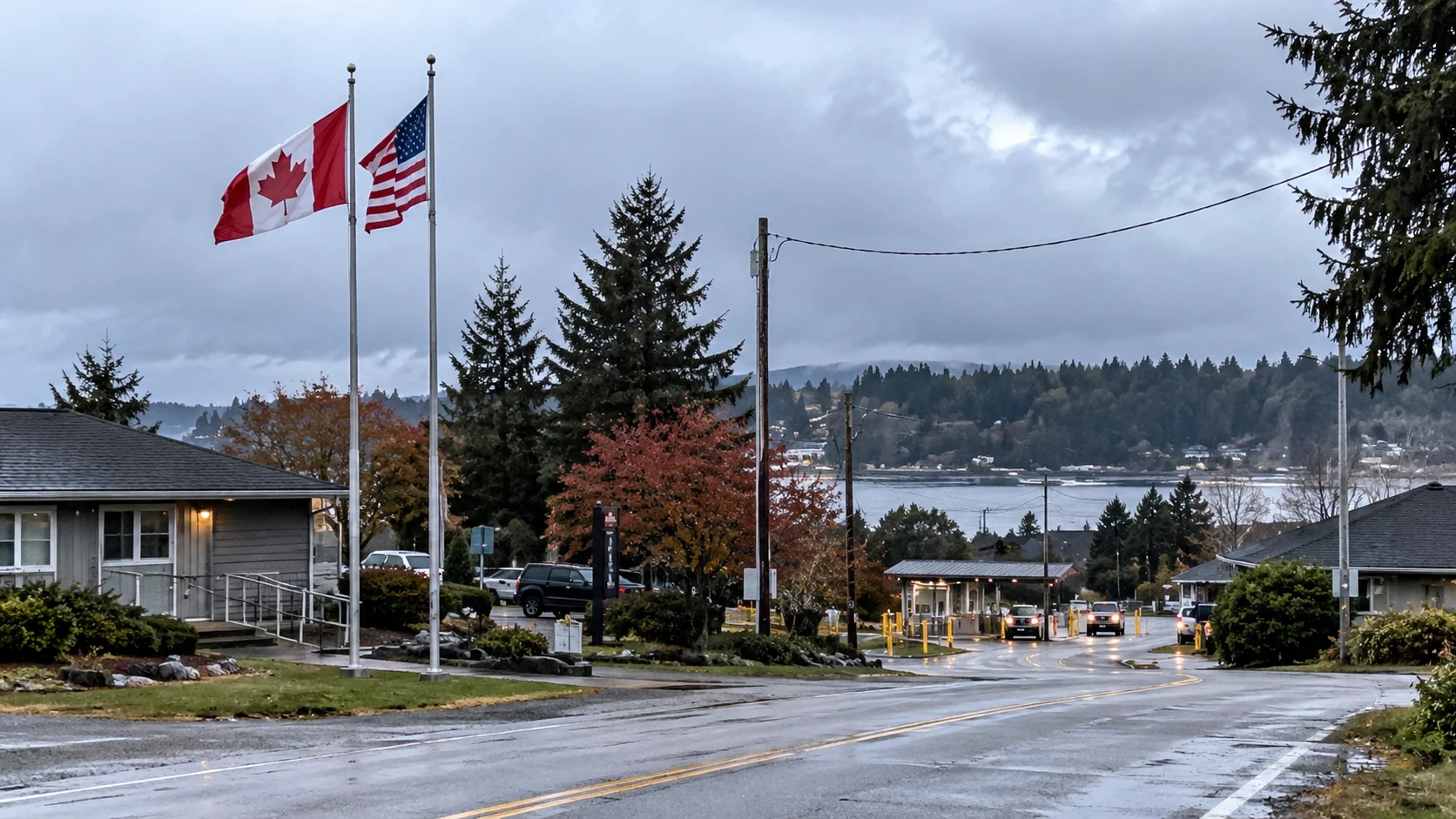
Point Roberts is a small, geographically separated U.S. community in Whatcom County, Washington. Although it is part of the United States, its land connection to the rest of Washington runs through British Columbia, Canada.
This geography can make access to medical services elsewhere in Washington dependent on crossing an international border. Residents may need to consider border procedures when traveling to larger medical facilities in nearby communities, including Bellingham.
Point Roberts has a local medical clinic, according to published reporting. However, it remains unclear whether Adamson sought treatment there before her death or whether the clinic could have provided the care she needed.
Her case has highlighted the potential difficulties that can arise when geographic isolation, medical needs and immigration concerns intersect. The specific medical circumstances surrounding her death, however, remain distinct from the broader questions raised by the case.
What Authorities Have Said About Her Death
The Whatcom County Sheriff’s Office and the county medical examiner described Adamson’s death as appearing to be from natural causes, according to Cascadia Daily News. The sheriff’s office also said the death did not appear to be criminal in nature.
A definitive medical cause of death had not been publicly established in the latest reporting available as of October 25, 2026. It is therefore not possible to conclude that the fall, an underlying medical condition or the delay in obtaining hospital treatment caused her death.
That distinction is important because the account of her decision to decline care comes primarily from statements by her son and people familiar with her circumstances. Although their accounts describe her fears and the events preceding her death, they do not independently establish the medical cause.
Immigration Case Was Still Pending at the Time of Her Death
Adamson died before the November 4 immigration hearing identified in published reports. Her death has raised questions about the practical consequences that immigration uncertainty can have for people living in geographically isolated communities.
Her son has said he believes fear of crossing the border prevented his mother from obtaining hospital care. That account underscores the circumstances he says she faced, but a direct causal link between her immigration concerns, her medical decisions and her death has not been officially established.
As of October 25, the central unresolved question remained the precise medical cause of Adamson’s death. The available reporting established that she died at home on October 18, that she had recently fallen and that her family believes immigration-related fears influenced her decision to decline hospital treatment.