
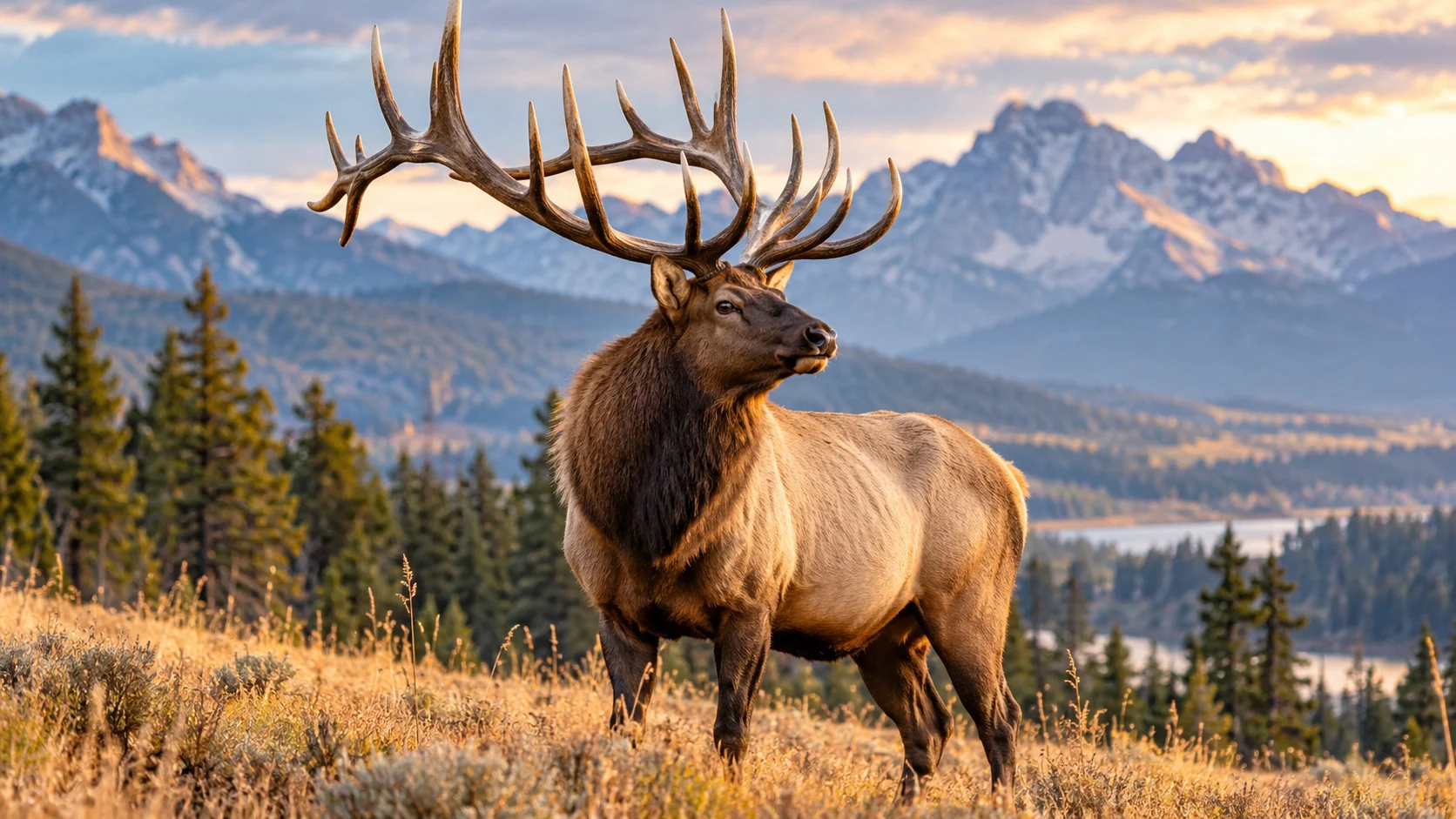
Arizona bowhunter Jay Elmer accomplished a feat few hunters could imagine: taking two record-setting bull elk with a bow and arrow in consecutive seasons. His remarkable hunts in 1979 and 1980 became the subject of an Outdoor Life feature originally published in November 1981. The magazine republished the historic account on October 26, 2026, bringing renewed attention to Elmer’s achievement.
Elmer’s success was not simply the result of encountering two exceptional animals. The story describes years of hunting experience, careful scouting and a willingness to pass up promising opportunities while waiting for a larger bull.
According to the original account, Elmer began bowhunting in 1974 to make hunting more challenging. After taking a bull that scored 351 points in 1976, he decided that future hunts would focus on finding an animal that could surpass that achievement.
His search led him to remote, thickly vegetated country near Flagstaff, Arizona. The area offered difficult hunting conditions, but Elmer believed its relatively low hunting pressure could allow mature bulls to survive. His early scouting trips produced few elk sightings, yet he continued returning to the same area.
The 1979 Bull Set a New Benchmark
Elmer’s persistence paid off during the 1979 hunting season. On the evening of the eighth day, he followed signs of elk through dense brush and gradually approached a large bull. After getting within close range, he released an arrow. The animal ran before Elmer tracked it and found it dead approximately 400 yards away.
The bull received an official score of 384 5/8 points, according to the original Outdoor Life report. That score exceeded the previous world-record mark cited in the account by approximately four inches, making the animal a major achievement in bowhunting history.
However, the record-book process involved an important distinction. The Pope and Young Club updated its records on a two-year cycle at the time, meaning Elmer’s 1979 bull was not ultimately recognized as a separate world-record entry before his next hunt produced an even larger animal.
An Even Larger Bull Followed in 1980
Elmer returned to the same hunting area in the following season, confident that other mature bulls remained there. He and his wife, Cheryl, scouted the area, monitored elk movements and watched for opportunities to approach the animals without disturbing them.
On the fourth day of the hunt, Elmer identified fresh tracks and signs of a herd. He later followed several bulls through thick juniper cover, repeatedly abandoning approaches when he could not obtain a clear, close-range shot. Rather than rush the opportunity, he continued working to position himself where the animal might pass.
The decisive encounter came the following morning. After moving ahead of the elk, Elmer waited near a ravine. A large bull eventually approached within roughly 20 yards, giving him the opportunity he had been seeking. He released his arrow, striking the animal in the chest. The bull ran a short distance before collapsing.
The second elk scored 389 5/8 points, surpassing the score of Elmer’s 1979 bull by five points. The original report said the two animals occupied the first and second positions in the Pope and Young record book at that time.
How the Historic Achievement Compares With Today’s Records
Elmer’s accomplishment remains a notable chapter in American bowhunting history, but the historical rankings should not be confused with current world records. Official record books have changed considerably since the late 1970s and early 1980s.
As of October 2026, the Pope and Young Club lists Stephen Felix’s 430-point typical American elk as its world-record entry in that category. Casey Brooks holds the club’s non-typical American elk record with a score of 478 2/8 points, following official confirmation in October 2025.
The Boone and Crockett Club maintains a separate record system covering legally taken big-game animals regardless of hunting method. Its world-record non-typical American elk remains the famous Spider Bull, harvested by Denny Austad in Utah in 2008 and officially scored at 478 5/8 points.
These separate categories matter because record scores depend on the organization, classification and measurement rules used. A historic record-setting animal in one category does not necessarily represent the current world record across all categories.
Elmer’s back-to-back achievement stands out for its combination of persistence, fieldcraft and restraint. His story also illustrates why trophy records need context: the circumstances of a hunt, the final verified measurements and the specific record-book category all matter when assessing a claim of a world-record bull elk.