
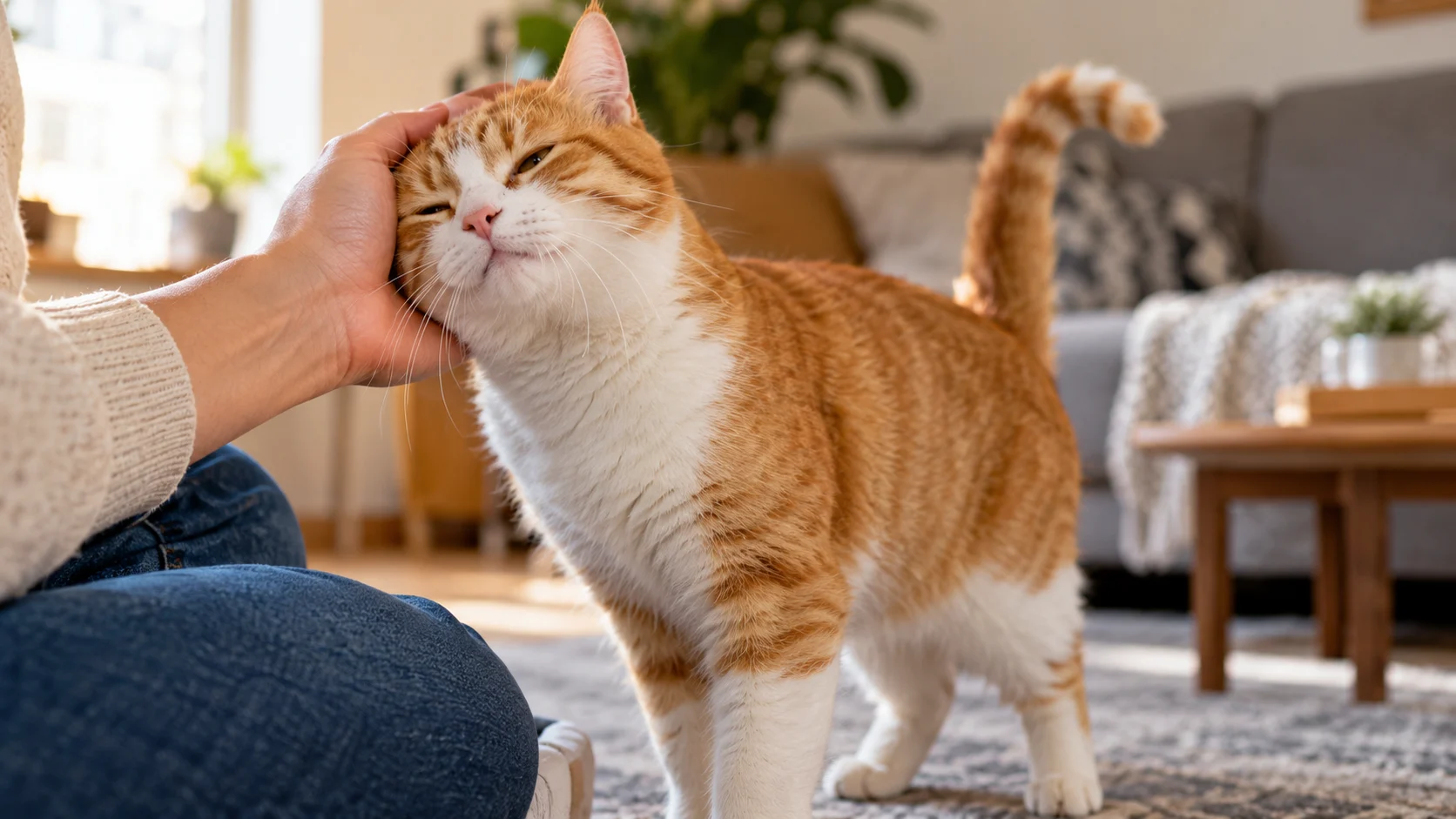
Cats do not always show affection in obvious ways. Instead of running to greet their owners or constantly seeking attention, many cats communicate trust and attachment through subtle body language, gentle sounds and everyday behaviors. From slow blinking and head rubbing to sleeping nearby, these actions can offer valuable clues about how a cat feels around its favorite people.
Understanding how cats show affection signs can help pet owners build a stronger bond with their feline companions. However, no single behavior proves that a cat feels a particular emotion. Veterinarians and animal behavior experts recommend considering a cat’s overall body language, individual personality and the situation before interpreting its behavior.
1. Your Cat Slowly Blinks at You
A slow blink is one of the best-known signs of positive communication between cats and humans. When a cat looks toward you, gently narrows its eyes and slowly closes them before opening them again, it may be communicating that it feels comfortable and safe.
Research published in the journal Scientific Reports in 2020 found that cats responded to human slow blinking with similar eye movements and were more likely to approach an unfamiliar person after a slow-blink interaction than after a neutral expression.
To try this form of communication, look toward your cat without staring intensely, slowly close your eyes and gently reopen them. Allow your cat to decide whether it wants to respond or approach. A slow blink is a positive sign, although it should not be treated as a definitive measure of affection.
2. Your Cat Rubs Its Head or Cheeks Against You
If your cat gently presses its forehead against your hand, rubs its cheeks against your legs or nudges your face, it may be showing social familiarity and trust. This behavior is commonly known as head bunting when the cat deliberately presses its head against a person or another animal.
Cats have scent glands around their cheeks, forehead and other parts of their bodies. Rubbing these areas against familiar people or objects helps distribute scent and contributes to familiar scent associations.
When your cat approaches and rubs against you, it is often inviting friendly contact. You can respond by offering a gentle cheek or chin scratch, provided your cat appears comfortable. Avoid forcing the interaction if your cat moves away.
3. Your Cat Holds Its Tail Upright When Greeting You
A cat’s tail can provide useful information about its mood. An upright tail, sometimes with a slight curve at the tip, commonly accompanies a friendly greeting. Your cat may approach you this way when you return home, enter a room or begin preparing its food.
Some cats also weave between their owners’ legs or gently touch them with their tails. These behaviors can occur during friendly social interactions and may indicate that the cat feels comfortable in your presence.
However, tail movement must be interpreted in context. A rapidly thrashing tail, a puffed-up tail or a tightly tucked tail can indicate agitation, fear or stress rather than affection. Look at the ears, posture and facial expression before deciding what your cat is communicating.
4. Your Cat Purrs When It Is Near You
Purring is often associated with contentment, particularly when a cat is relaxed, resting beside its owner or enjoying gentle petting. If your cat approaches you, settles comfortably on your lap and begins purring, it may be expressing comfort during the interaction.
Nevertheless, purring does not always mean that a cat is happy. Cats may also purr when they are frightened, stressed, uncomfortable or unwell. Consider other signs, including relaxed muscles, normal breathing, comfortable positioning and willingness to remain close.
If your cat is purring while hiding, avoiding touch or showing a sudden change in behavior, do not assume that everything is fine. A veterinarian can help determine whether an underlying health concern is involved.
5. Your Cat Kneads You With Its Paws
Kneading happens when a cat rhythmically presses its front paws against a soft surface, alternating between the left and right paws. Cats may knead blankets, cushions, their bedding or their owners’ laps.
This behavior begins during kittenhood, when kittens knead their mother’s mammary area while nursing. Many cats continue kneading as adults, especially when they are settling down to rest or interacting with someone familiar.
Adult kneading is commonly associated with comfort and familiar routines, although its precise meaning can vary between individual cats. If your cat kneads your lap while appearing relaxed, it may be a sign that it feels secure around you.
If its claws become uncomfortable, place a thick blanket between your cat and your skin. Never punish a cat for kneading, as it is a normal feline behavior.
6. Your Cat Licks You or Grooms You
Cats sometimes lick their owners’ hands, arms or faces. Social grooming is a behavior cats can use with familiar animals, and licking a person may be part of a similar affiliative interaction.
Your cat may also groom another pet in the household or relax beside you while you brush its coat. These interactions can contribute to familiar, positive relationships.
However, licking can have different explanations, including curiosity, the taste of salt on human skin or an established habit. It is more useful to consider whether the behavior occurs during an otherwise relaxed and friendly interaction than to interpret every lick as an expression of love.
7. Your Cat Follows You From Room to Room
Some cats prefer to stay close to their owners throughout the day. Your cat may follow you into the kitchen, sit outside the bathroom, watch you work or settle on a nearby chair while you read.
This behavior may reflect social attachment, curiosity or a preference for sharing familiar spaces. Cats do not always need to sit directly on a person to enjoy that person’s company.
A cat that is relaxed enough to eat, play, explore or sleep while you are nearby may feel secure in your presence. At the same time, following can also be motivated by food, attention or routine, so it should be understood alongside the cat’s other behaviors.
8. Your Cat Sleeps Beside You or on Your Bed
Sleeping near you can be a sign of familiarity and comfort. Resting leaves an animal less attentive to its surroundings, so choosing a familiar sleeping location beside a trusted person may suggest that the cat feels safe in that environment.
Your cat might sleep at the foot of your bed, curl up beside your legs or settle on a blanket near your desk. Others may prefer a nearby chair or a separate sleeping area in the same room.
Not every affectionate cat wants to sleep with its owner. Some prefer their own space because of temperature, noise, movement or personal preference. A cat that chooses to rest nearby can be just as comfortable with you as one that sleeps directly on your lap.
9. Your Cat Shows You Its Belly
When a cat rolls onto its back and exposes its stomach, it may be demonstrating that it feels comfortable enough to adopt a vulnerable-looking position around you. In some situations, this can be a sign of trust.
However, an exposed belly is not necessarily an invitation for a belly rub. Cats may roll onto their backs to stretch, play, scratch or acknowledge a familiar person. Many cats instinctively protect their abdomen and may react by grabbing, kicking or biting if someone touches it unexpectedly.
If your cat displays its belly, let it choose what happens next. Pet the areas it usually enjoys, such as its cheeks or chin, and stop if it shows signs of discomfort. Respecting this boundary helps maintain a positive relationship.
10. Your Cat Seeks Gentle Attention and Makes Soft Sounds
A cat that approaches you, gently nudges your hand, leans into a familiar scratch or settles beside you may be actively seeking social interaction. Some cats also greet their owners with short meows, chirps or trills.
These sounds can function as part of the cat’s communication with people. Their meaning depends on the circumstances, including whether the cat is greeting you, requesting food, initiating play or asking for attention.
Pay attention to how your cat responds when you interact with it. A relaxed posture, forward-facing ears, gentle facial movements and voluntary approaches generally provide more useful information than vocalization alone.
How Can You Tell Whether Your Cat Feels Safe With You?
The clearest indication of a comfortable relationship is usually a combination of behaviors rather than one isolated gesture. A cat may approach voluntarily, maintain a relaxed posture, rest nearby, respond to gentle interaction and return for attention when it chooses.
In contrast, flattened ears, a tense body, repeated attempts to escape, hissing or forceful tail movements can indicate that the cat wants more space. Even a cat that normally enjoys petting may become overstimulated during a long interaction.
Give your cat opportunities to approach and leave freely. Many cats prefer short, gentle petting sessions, especially around the cheeks, chin and head. Pause regularly and watch whether your cat leans in for more contact or moves away.
Can Cats Show Affection Without Cuddling?
Yes. Some cats rarely sit on laps or tolerate being held, yet still develop strong, familiar relationships with their owners. They may prefer to remain in the same room, greet a person at the door, play nearby or simply relax within sight of the people they trust.
A cat’s temperament, early experiences, age and preferences can influence how it expresses social attachment. A reserved cat should not automatically be considered unfriendly, and a cat that enjoys cuddling should not be assumed to welcome every form of physical contact.
The goal is to understand the individual cat rather than expect it to behave like another pet. Offering predictable routines, appropriate play, gentle interactions and comfortable resting places can help support a healthy human-cat bond.
When Should You Be Concerned About a Change in Your Cat’s Behavior?
If your cat suddenly becomes unusually withdrawn, stops seeking familiar interactions, reacts painfully to touch or begins hiding more than usual, pay attention to the change. Behavioral shifts can sometimes be associated with stress, environmental changes, pain or illness.
Changes in appetite, drinking, litter box habits, mobility or grooming may also warrant veterinary attention. Seek advice from a veterinarian if unusual behavior persists, appears suddenly or occurs alongside other concerning symptoms.
The Bottom Line
Cats show affection in different ways, and many of their signals are subtle. Slow blinking, head rubbing, an upright tail, kneading, grooming, purring and choosing to rest nearby can all be signs of trust or positive social interaction.
The most reliable approach is to observe your cat’s whole body language and respect its individual preferences. When you allow your cat to choose when and how to interact, you give it the freedom to build a relationship based on familiarity, comfort and trust.