
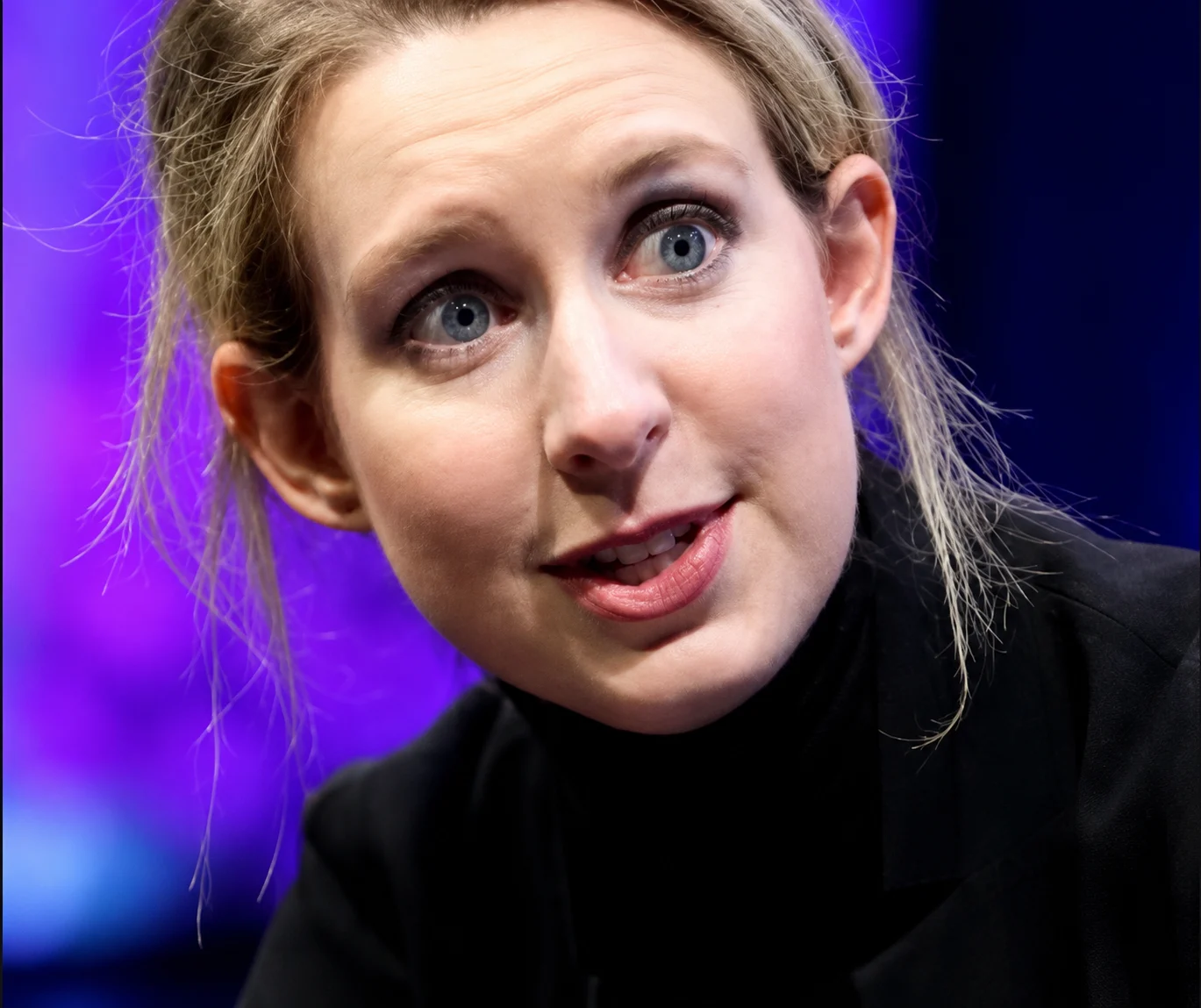
Billy Evans, the longtime partner of disgraced Theranos founder Elizabeth Holmes, is speaking publicly about the decision to document their family’s life ahead of her imprisonment, as the documentary You Can See Everything opens in U.S. theaters on October 16, 2026. The film offers an intimate look at the couple’s relationship, Holmes’ continued insistence that she did nothing wrong, and the events surrounding the collapse of the blood-testing company that once promised to transform healthcare.
Evans discussed the project in an interview with David Friedberg on the All-In Podcast, released on October 15. He said the couple wanted audiences to see Holmes directly rather than rely exclusively on earlier media portrayals of her. However, he acknowledged that he had not watched the completed documentary and was uncertain about how the filmmakers had presented their family.
“So the whole idea was here she is. See her and make up your own mind,” Evans said during the interview.
Evans also admitted that participating in the project could turn out to be a decision he regretted. His comments come as the film brings renewed attention to Holmes’ personal life, the years leading up to her imprisonment, and the enduring controversy over whether her ambitious vision for medical testing was inseparable from the deception that led to her criminal conviction.
A documentary filmed before Holmes entered prison
You Can See Everything is directed by Nathan Fielder and Lance Oppenheim. The documentary initially follows Holmes during the 34 days before she was due to report to federal prison in May 2023. During that period, Holmes and Evans invited a film crew into their home in Del Mar, California, allowing the filmmakers to record aspects of their daily lives with their two young children.
The project subsequently developed into a longer examination of the couple and their attempts to explain their lives to the public. Filming continued after Holmes entered prison, with Fielder maintaining contact with her and documenting Evans through 2025. The result is not simply a record of a convicted technology executive preparing for incarceration. It also examines how Holmes and Evans understand her public reputation, the consequences of the Theranos scandal, and their continuing relationship with the story surrounding the failed company.
Fielder is known for projects that blur the boundaries between documentary, comedy and carefully constructed real-life situations. His approach places him inside the story rather than at a distance from his subjects. That style gives the film access to private moments while also raising questions about how the presence of a camera can influence the behaviour of the people being filmed.
The filmmakers’ unusual access to Holmes and Evans provides a perspective that differs from conventional interviews or retrospective accounts. At the same time, the footage does not eliminate the central questions surrounding the Theranos scandal. Holmes continues to maintain that she did nothing wrong, despite her conviction on investor-fraud charges. The documentary therefore presents a personal account that must be considered alongside the established legal record.
What Billy Evans said about his family and Holmes’ public image
During the podcast interview, Evans discussed the challenges of raising their children while Holmes serves her prison sentence. He said the children visit their mother weekly and that he tries to answer their questions honestly, even when the conversations involve complicated or uncomfortable subjects.
“When they ask questions, we tell them the truth, regardless of how complicated or uncomfortable that conversation is,” Evans said.
His comments highlight the family consequences of a case that has continued to attract public attention years after Theranos shut down. Holmes reported to prison on May 30, 2023, leaving Evans to manage family life while maintaining their relationship across the restrictions imposed by her incarceration.
Evans also reflected on Holmes’ decision not to testify publicly during her criminal trial. He described that decision as one of the biggest mistakes she had made, suggesting that a direct explanation from Holmes might have affected how the public understood her actions. His view reflects his personal assessment of the case, rather than a legal finding about whether her public silence influenced the verdict.
Holmes and Evans began their relationship in 2017 and became engaged in 2018. Their first child was born in 2021, and their daughter was born in 2023. Evans remained publicly supportive of Holmes during her prosecution, sentencing and imprisonment, even as her conviction made her one of the most controversial figures to emerge from Silicon Valley’s startup culture.
The Theranos scandal behind the film
Holmes founded Theranos in 2003 after leaving Stanford University. The company claimed that its technology could perform a wide range of medical tests using only a small amount of blood, potentially reducing the cost and inconvenience associated with conventional laboratory testing. Holmes presented the idea as a major advance in healthcare and attracted substantial investment from prominent business figures and wealthy investors.
At its height, Theranos was valued at approximately $9 billion. Holmes became one of the most prominent figures in the technology industry, promoting a vision of faster, more accessible diagnostic testing. The company attracted attention from investors and major commercial partners, including pharmacy chains that explored offering its blood-testing services.
That reputation began to unravel in 2015, when reporting by The Wall Street Journal raised serious questions about the reliability of Theranos’ technology and whether the company was delivering on its claims. Subsequent investigations and regulatory scrutiny intensified concerns about its testing practices and the representations made to investors.
Theranos eventually shut down its clinical laboratory operations and wellness centres in 2016 before formally dissolving in 2018. The company’s collapse became a defining case study in the risks of startup culture, the consequences of inadequate oversight and the importance of independent verification when commercialising medical technology.
The central issue in Holmes’ criminal case was investor fraud. In January 2022, a federal jury found her guilty of one count of conspiracy to commit wire fraud and three counts of wire fraud involving investors. She was acquitted of the four charges involving fraud against patients, while jurors did not reach unanimous verdicts on three other investor-related charges.
In November 2022, Holmes was sentenced to 11 years and three months in federal prison. She began serving her sentence in May 2023. In February 2025, the U.S. Court of Appeals for the Ninth Circuit upheld her convictions and sentence, rejecting arguments that legal errors had affected the outcome of the trial.
Holmes has continued to maintain her innocence. Her position, however, does not change the jury’s verdict or the subsequent appellate ruling. The distinction is important as the new documentary revisits her personal account of the events surrounding Theranos.
Why the documentary is drawing attention
The film arrives at a time when the Theranos case remains a prominent example of the dangers of excessive confidence in a company’s technological claims. Its focus on Holmes’ private life offers viewers an opportunity to see the person behind the public controversy, but it also raises questions about the limits of personal explanations after a criminal conviction.
Evans’ decision to participate is central to that tension. He has argued that viewers should make up their own minds about Holmes, yet he acknowledged before the film’s theatrical release that he had not seen its final version. His comments leave open the question of whether he believes the finished documentary will reflect the story he and Holmes intended to share.
The documentary also examines Evans’ own role in managing the family’s public image. Reporting about the film describes footage involving his influence over Holmes’ social media presence while she is incarcerated, along with questions about control of her likeness and how the couple sought to present their story. These elements broaden the film’s focus beyond Holmes’ conviction and raise questions about the relationship between privacy, publicity and the commercial value of a high-profile personal narrative.
The film does not provide a replacement for the evidence considered in court. Instead, it places Holmes and Evans in front of the camera and allows their words and behaviour to become part of the story. Viewers must distinguish between the couple’s own explanations, the filmmakers’ presentation and the findings established through the criminal proceedings.
You Can See Everything was released in U.S. theaters on October 16, 2026, through A24. The film runs approximately two hours and 55 minutes. By combining footage of Holmes before prison with later observations of Evans and the family, it revisits a scandal that continues to shape discussions about medical innovation, investor accountability and the power of personal narratives in the technology industry.
For Evans, the release represents a moment when the family’s private life becomes the subject of renewed public scrutiny. For audiences, the documentary offers another examination of a prominent business figure whose ambitious promises ended in criminal convictions, and of the people who continue to stand by her despite the consequences.