
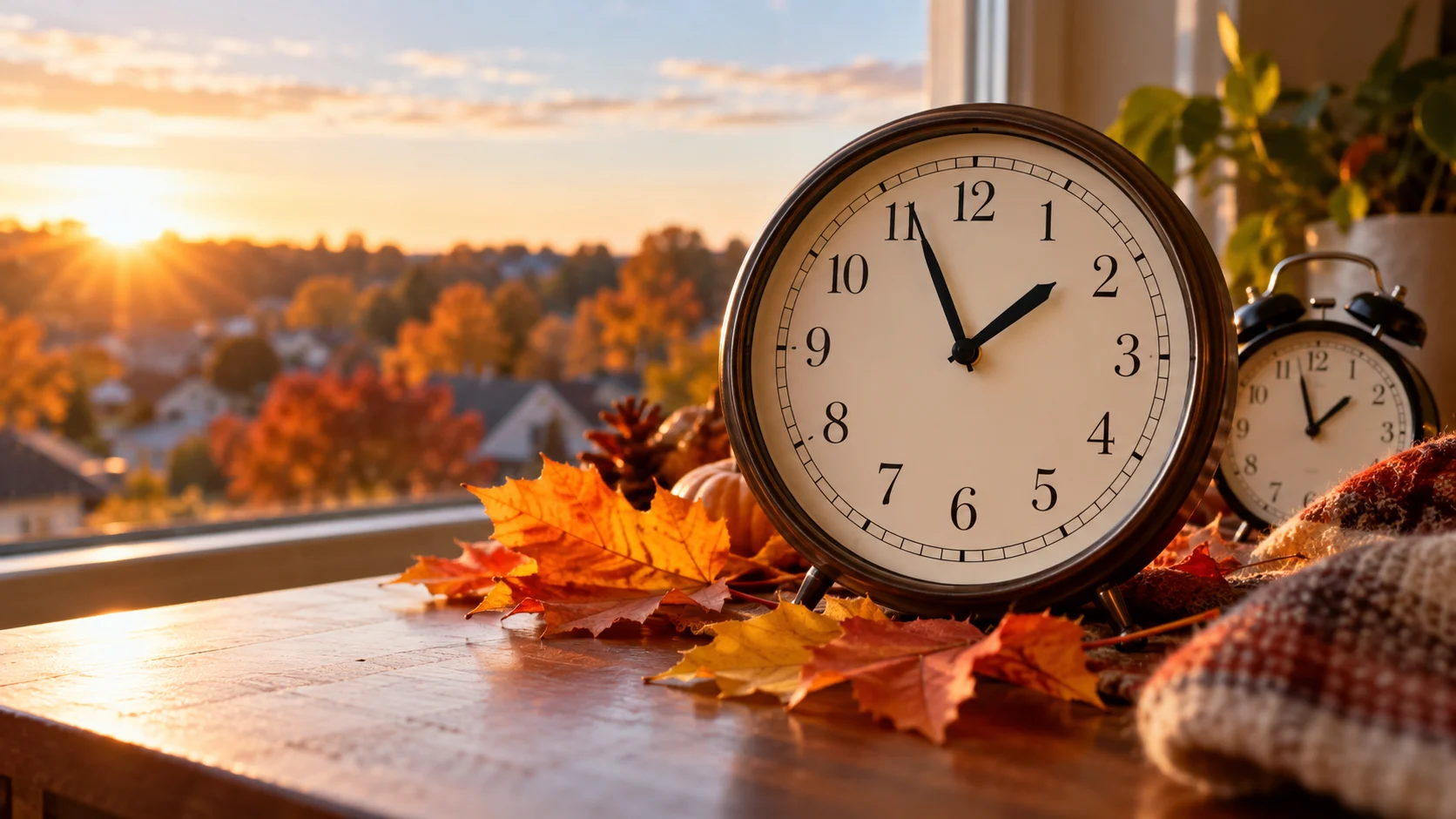
Daylight saving time is approaching its annual end in the United States, with clocks scheduled to move back one hour on Sunday, November 1, 2026. Most Americans will gain an extra hour overnight as the country returns to standard time for the fall and winter months. However, a renewed effort in Congress to make daylight saving time permanent has raised questions about whether the traditional clock changes could eventually come to an end.
As of October 17, 2026, the November clock change remains scheduled under existing federal law. Although the U.S. House of Representatives has approved legislation to make daylight saving time permanent, the proposal has not cleared the Senate and has not become law.
When Does Daylight Saving Time End in 2026?
Daylight saving time will end at 2 a.m. local time on Sunday, November 1, 2026, in most parts of the United States. At that moment, clocks will move backward one hour, returning to 1 a.m. standard time.
This change is commonly called “fall back.” Unlike the spring transition, when clocks move forward and people lose an hour, the autumn adjustment provides an extra hour on the clock overnight.
Here are the key dates to remember:
- Daylight saving time began: Sunday, March 8, 2026.
- Daylight saving time ends: Sunday, November 1, 2026.
- Daylight saving time is scheduled to return: Sunday, March 14, 2027.
People can prepare by checking their schedules, reviewing early-morning appointments and confirming that manually operated clocks are reset. Most modern smartphones and internet-connected devices update automatically when their time-zone settings are correct.
Why Do Americans Change Their Clocks Twice a Year?
Daylight saving time involves shifting clocks forward by one hour during part of the year to provide more daylight in the evening. When the country returns to standard time in November, the clock change shifts an hour of daylight back toward the morning.
The system is intended to adjust the timing of daylight to match seasonal changes in sunrise and sunset. Supporters argue that longer evening daylight can provide more opportunities for outdoor activities, shopping, dining and other activities after work.
However, the practice remains controversial. Critics point to the disruption caused by changing clocks, questions about energy savings and concerns about how time changes affect sleep and daily routines. The debate has increasingly focused on whether the United States should adopt one time standard throughout the year instead of continuing the twice-yearly adjustment.
Will Daylight Saving Time Become Permanent in the United States?
The future of daylight saving time has become a major legislative issue in Washington. On July 14, 2026, the U.S. House of Representatives passed the Sunshine Protection Act of 2025 by a vote of 308 to 117. The legislation would make daylight saving time permanent, ending the traditional practice of moving clocks backward in November and forward the following spring.
The bill was received in the Senate on July 15 and referred to the Senate Committee on Commerce, Science, and Transportation. As of October 17, the Senate has not voted to approve the measure.
The proposal has received support from President Donald Trump and lawmakers who want to eliminate the twice-yearly clock changes. Supporters argue that keeping daylight saving time throughout the year would provide more evening daylight and remove the need for seasonal clock adjustments.
Opponents and critics have raised concerns about darker winter mornings, particularly in northern states where sunrise could occur later during the school and commuting hours. The potential effects on children traveling to school, workers beginning early shifts and different regions of the country remain central to the debate.
For now, the legislation remains pending. House approval alone does not change federal timekeeping rules. Unless the proposal completes the legislative process and becomes law, most Americans should continue to expect clocks to move back one hour on November 1, 2026.
Which U.S. States Do Not Observe Daylight Saving Time?
Although most of the country changes clocks twice a year, several areas remain on standard time throughout the year.
Hawaii does not observe daylight saving time. The state experiences comparatively little seasonal variation in daylight hours, making the clock change less useful there.
Most of Arizona also remains on standard time year-round. The Navajo Nation is an important exception because it observes daylight saving time. The Hopi Reservation, which is surrounded by Navajo Nation territory in Arizona, does not observe it.
U.S. territories that do not observe daylight saving time include Puerto Rico, Guam, the U.S. Virgin Islands, American Samoa and the Northern Mariana Islands.
These exceptions mean that the November clock change will not apply uniformly across every U.S. state and territory. Travelers, businesses and people coordinating meetings across time zones should check the local time in their destination rather than assume every location follows the same schedule.
What Happens After the November Clock Change?
After November 1, most of the United States will remain on standard time throughout the winter. Morning daylight will arrive earlier according to the clock, while sunset will occur earlier in the evening compared with the final days of daylight saving time.
The next scheduled transition to daylight saving time is March 14, 2027, when clocks in participating areas will move forward one hour at 2 a.m. local time. That schedule could change if federal legislation is enacted, but no permanent change has been approved as of October 17, 2026.
Until Congress takes further action, residents should prepare for the November transition as usual. Checking electronic calendars, travel itineraries, work shifts and appointment times can help prevent confusion during the changeover.
What Americans Need to Know About Daylight Saving Time 2026
The next U.S. daylight saving time change is scheduled for Sunday, November 1, 2026, when clocks will fall back one hour at 2 a.m. local time in participating areas. The House has passed a bill seeking to make daylight saving time permanent, but the Senate has not approved it. For now, the existing seasonal clock-change schedule remains in effect, and the next spring transition is scheduled for March 14, 2027.