
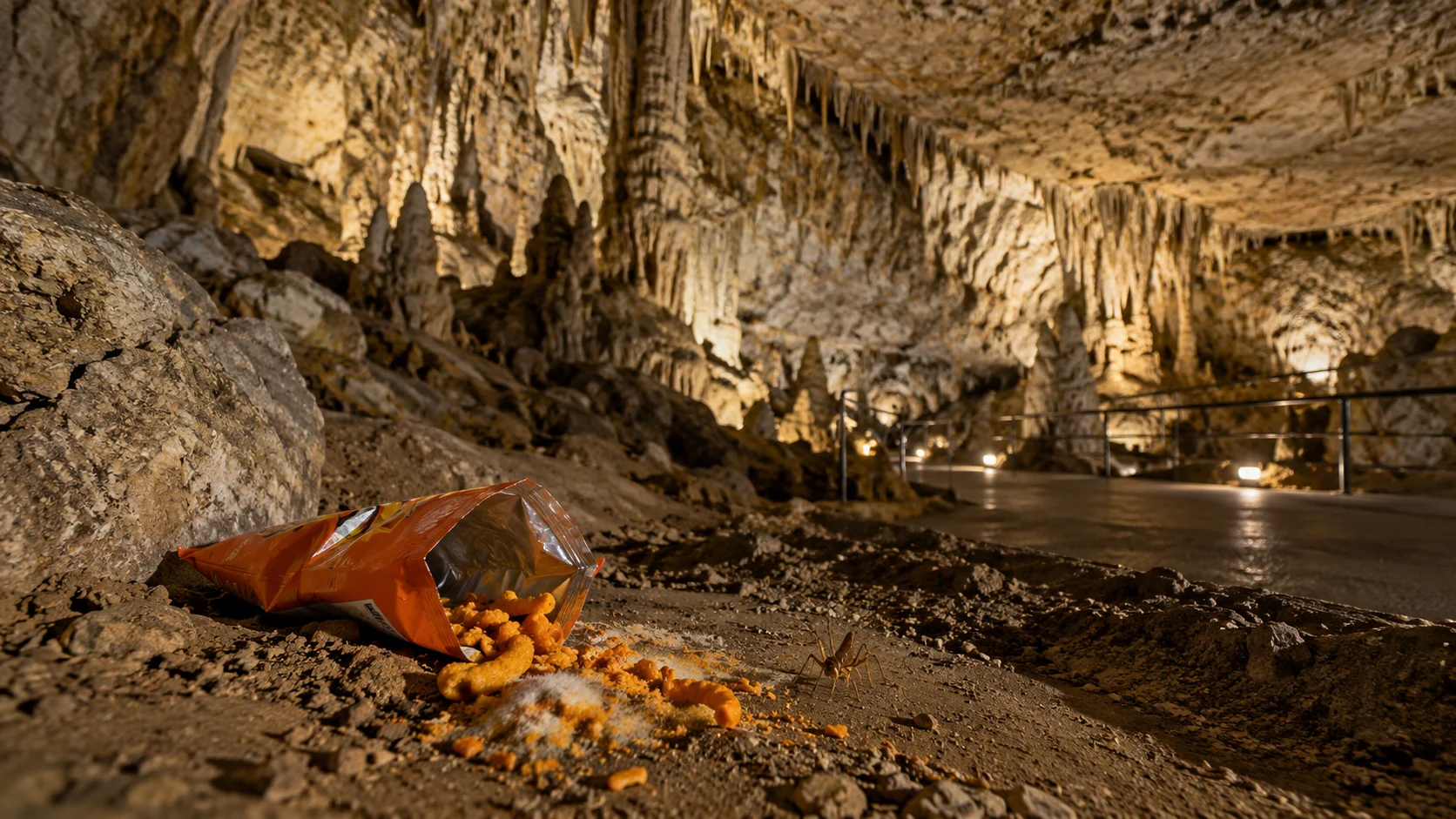
A discarded bag of Cheetos inside Carlsbad Caverns National Park in New Mexico became an unexpected example of how a small amount of food waste can disrupt a fragile underground ecosystem. Park officials reported that the snack softened in the cave’s humid environment, encouraging microbial and fungal growth and attracting insects and other small organisms.
The incident came to public attention on September 6, 2024, when the National Park Service described the discovery inside the cavern’s Big Room. Updated reporting published in October 2026 has revisited the case, highlighting both the ecological consequences of the discarded snack and an important distinction: the documented effects were localized, not evidence of damage across the entire cave system.
How the Cheetos Bag Affected the Cave Environment
According to the National Park Service, the processed corn in the Cheetos softened under the cavern’s humid conditions, creating a food source for microorganisms and fungi. Mold subsequently developed and spread onto nearby surfaces.
The food residue also attracted cave crickets, mites, spiders and flies. These organisms became part of a temporary food web around the discarded snack, allowing nutrients from the Cheetos to move through a small community of organisms that depend on limited food supplies inside caves.
In a natural underground environment, organic material is often scarce, particularly in areas that receive little or no sunlight. Food introduced by visitors can therefore provide an unusual concentration of nutrients in a place where organisms are adapted to limited resources.
Rangers Removed the Food Waste and Contaminated Surface Material
Cleaning up the incident required more than simply picking up the empty packaging. Reporting published in October 2026 said park staff consulted a cave specialist before a ranger removed the crumbs and the upper layer of soil affected by the spill. The cleanup reportedly took approximately 20 minutes.
The response illustrates why park authorities discourage visitors from leaving food, crumbs and other waste underground. Even when the amount of material appears insignificant to a person, it can introduce nutrients and microorganisms into an environment where those additions may influence nearby biological activity.
Did the Cheetos Incident Damage the Entire Cavern?
The available evidence does not establish that the discarded Cheetos caused widespread or lasting damage throughout Carlsbad Caverns. The reported effects centered on the area around the snack and the temporary food web that developed there.
A review published on October 14, 2026, highlighted an important limitation in the available evidence: the incident was not accompanied by publicly reported microbial sequencing, comprehensive species counts or long-term monitoring demonstrating a broader ecological change. The documented growth of mold and activity around the food should not be interpreted as proof that the entire cavern’s ecosystem was permanently altered.
That distinction matters because environmental reporting can easily exaggerate a localized incident. The Cheetos discovery demonstrated how food waste can affect cave life, but the available information does not justify claims that one snack bag destroyed the cavern or caused a documented, cave-wide ecological crisis.
Why Cave Ecosystems Are Especially Sensitive to Human Activity
Cave ecosystems operate under conditions that differ significantly from those above ground. Many underground areas receive little natural light, and organisms often depend on small quantities of organic material carried in by water, animals or other natural processes.
Visitors can introduce additional food, litter, fibers and microorganisms. These materials may affect the distribution of nutrients and biological activity, particularly when they accumulate in places where food would otherwise be scarce.
Research into Carlsbad Caverns has also examined other forms of human influence, including microbial contamination associated with visitor activity and biological growth around artificial lighting. Those issues are separate from the Cheetos incident, but they reinforce the importance of managing human impacts in sensitive underground environments.
Carlsbad Caverns Food Rules Remain in Place
The National Park Service’s 2026 regulations prohibit the possession or consumption of food and drinks inside caves, except for plain, unflavored water, with designated underground lunchroom provisions and limited medical exceptions. Food is restricted because it can contaminate cave environments, increase litter and attract wildlife into areas they might not otherwise visit.
Visitors can help protect the cavern by following posted rules, staying on designated trails, keeping food and snacks out of prohibited areas, and taking their waste with them. Visitors should also avoid touching cave formations or disturbing organisms and surfaces along the trail.
What the Cheetos Incident Teaches About Cave Conservation
The Carlsbad Caverns incident offers a practical lesson in environmental protection: small actions can have consequences in places where natural conditions make resources scarce. A dropped snack may seem harmless, but its residue can provide food for microbes, encourage fungal growth and attract small animals.
At the same time, the evidence should be presented accurately. The incident demonstrated a localized ecological disturbance, not proven destruction of the entire cave ecosystem. Protecting Carlsbad Caverns requires preventing avoidable contamination while distinguishing documented effects from unsupported claims about long-term damage.