Four hours before the opening bell, the number that mattered most wasn’t a percentage. It was 18.21 — the VIX, dead flat, not moving a single tick even as Iran launched what US Central Command called an “attempted surprise attack” overnight. That’s not calm. That’s a market that already priced in the Middle East as background noise weeks ago and has moved on to worrying about something else entirely: what Jerome Powell’s successor says at 2:00 p.m.
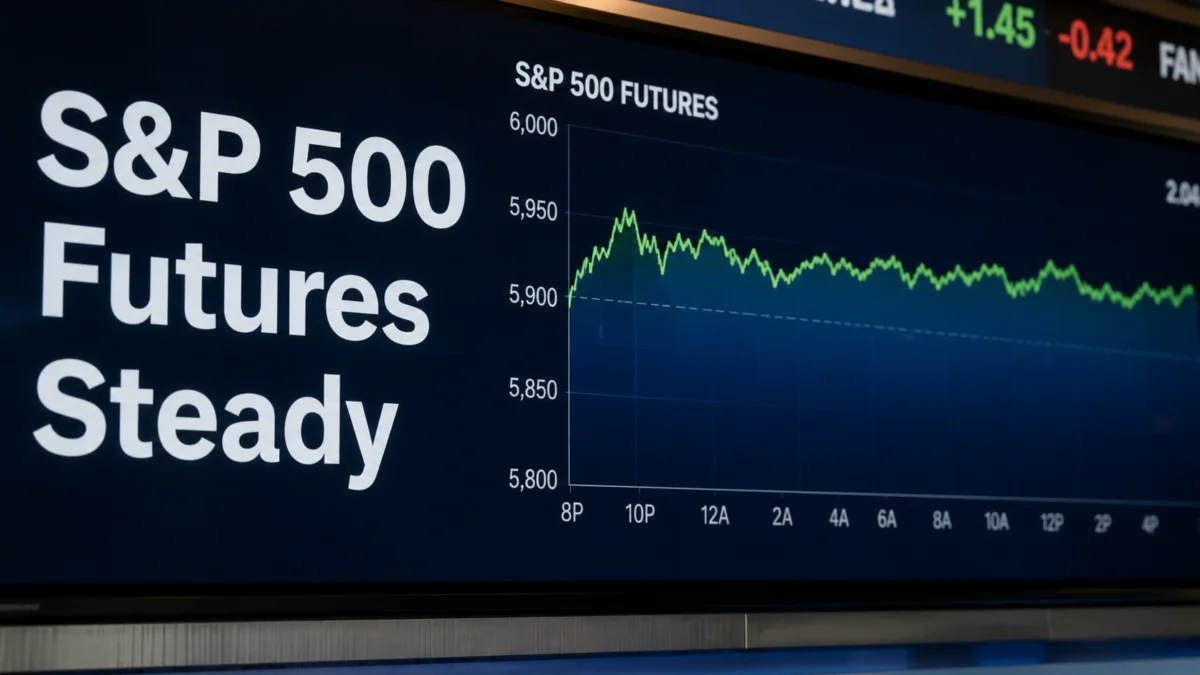
S&P 500 futures were up 0.22% to 7,482.00 as of 5:00 a.m. ET Wednesday, according to Yahoo Finance‘s live market blog. Dow futures added a thinner 0.06% to 52,978.00. Nasdaq-100 futures barely budged, up 0.02% to 27,927.75, weighed down by another rough session for Asian chip stocks that has started bleeding into US futures trading.
The stock market news today is really two stories stacked on top of each other. One is geopolitical and reactive. The other is domestic and scheduled. Only one of them is actually new.
Seoul Fell Nearly 6%. Wall Street Shrugged.
South Korea’s KOSPI Composite dropped almost 6% overnight as investors dumped Samsung and SK Hynix shares for a second straight session. SK Hynix, trading in the US as SKHY, was down 8.98% in pre-market action. The chipmaker had reported second-quarter profit growth of 557% year-over-year after Tuesday’s close — a number that would normally be a victory lap. Instead it triggered selling, because it came in below what Wall Street had modeled, feeding a narrative that’s been building for two weeks: the AI capital expenditure cycle may be outrunning the earnings it’s supposed to justify.
That fear has a direct US analog. Bloom Energy, a power supplier tied to data-center buildout, was down 11.34% pre-market. Seagate fell 8.53%. Both are getting caught in the same downdraft as the Korean chipmakers, even though neither reported anything Tuesday night.
Nasdaq-100 futures show it. They’re the only major index contract not clearing even a token gain this morning, a sign the chip-sector anxiety is reaching into US futures trading before Samsung’s own numbers even cross the wire.
| Index (Futures) | Level | Change | % Change |
|---|---|---|---|
| S&P 500 | 7,482.00 | +16.75 | +0.22% |
| Dow Jones | 52,978.00 | +34.00 | +0.06% |
| Nasdaq-100 | 27,927.75 | +5.75 | +0.02% |
| Russell 2000 | 2,971.90 | +7.40 | +0.25% |
| VIX | 18.21 | 0.00 | 0.00% |
Source: Yahoo Finance, as of 5:00 a.m. ET, July 29, 2026. Futures contracts, not cash index levels — the S&P 500, Dow, and Nasdaq Composite do not begin regular trading until 9:30 a.m. ET.
Iran, Round Two
Iran engaged US forces again on Tuesday for the first time since a pause in hostilities that had held since Friday. Oil reacted the way it always does now: Brent crude jumped more than 3% to trade near $85 a barrel. That’s the fourth time in six weeks oil has spiked on a Middle East headline, and each time the move has faded faster than the one before it — a pattern that shows up in the way Treasury yields have started shrugging off individual strike headlines even as they stay elevated on the broader risk premium.
What’s different this time isn’t the market reaction. It’s the calendar collision. The Fed’s rate decision lands at 2:00 p.m. ET today, and traders now have to price a geopolitical shock and a policy decision in the same six-hour window — something that hasn’t happened since the initial ceasefire talks in June.
The Fed Question Nobody Has a Clean Answer To
Here’s the part of today that actually has two-way risk. Consensus still leans toward the Federal Reserve holding rates steady. But it’s not the lopsided consensus it was a month ago. Persistently sticky inflation data, combined with new Fed Chair Kevin Warsh’s tighter approach to central bank communications, has left enough uncertainty that a rate hike — the first in three years — is no longer being dismissed as a tail risk.
The mechanism here is straightforward even if the outcome isn’t: a hike raises the discount rate applied to future corporate earnings, which hits high-multiple growth and AI-adjacent names hardest — precisely the stocks already under pressure from the Korean chip selloff. A hold, by contrast, would remove one of two active shocks the market is juggling this morning, potentially letting Tuesday’s earnings reaction do the talking instead.
That earnings reaction is its own subplot. Microsoft and Meta report after today’s close, both under pressure to justify AI spending after Alphabet’s capital expenditure guidance last week rattled the sector. A hawkish Fed same-day as disappointing Big Tech numbers would be the kind of one-two combination that turns a quiet pre-market session into an ugly Thursday morning.
What to Watch
Ahead of the Fed, a wave of consumer-facing earnings hits the tape: Procter & Gamble, Starbucks, and Chipotle report before the bell, with Qualcomm and Arm Holdings following Microsoft and Meta after the close. Thursday brings the first estimate of second-quarter GDP along with June’s PCE inflation data — the Fed’s preferred inflation gauge — meaning today’s rate decision won’t even be a full 24 hours old before the next major data point tests it.
The VIX sitting motionless at 18.21 is worth sitting with for a second. It’s elevated relative to where it spent most of the spring, but it isn’t spiking — a sign options traders aren’t positioning for a shock outcome from either the Fed or the overnight Iran news, even as both remain genuinely unresolved heading into the open.

