
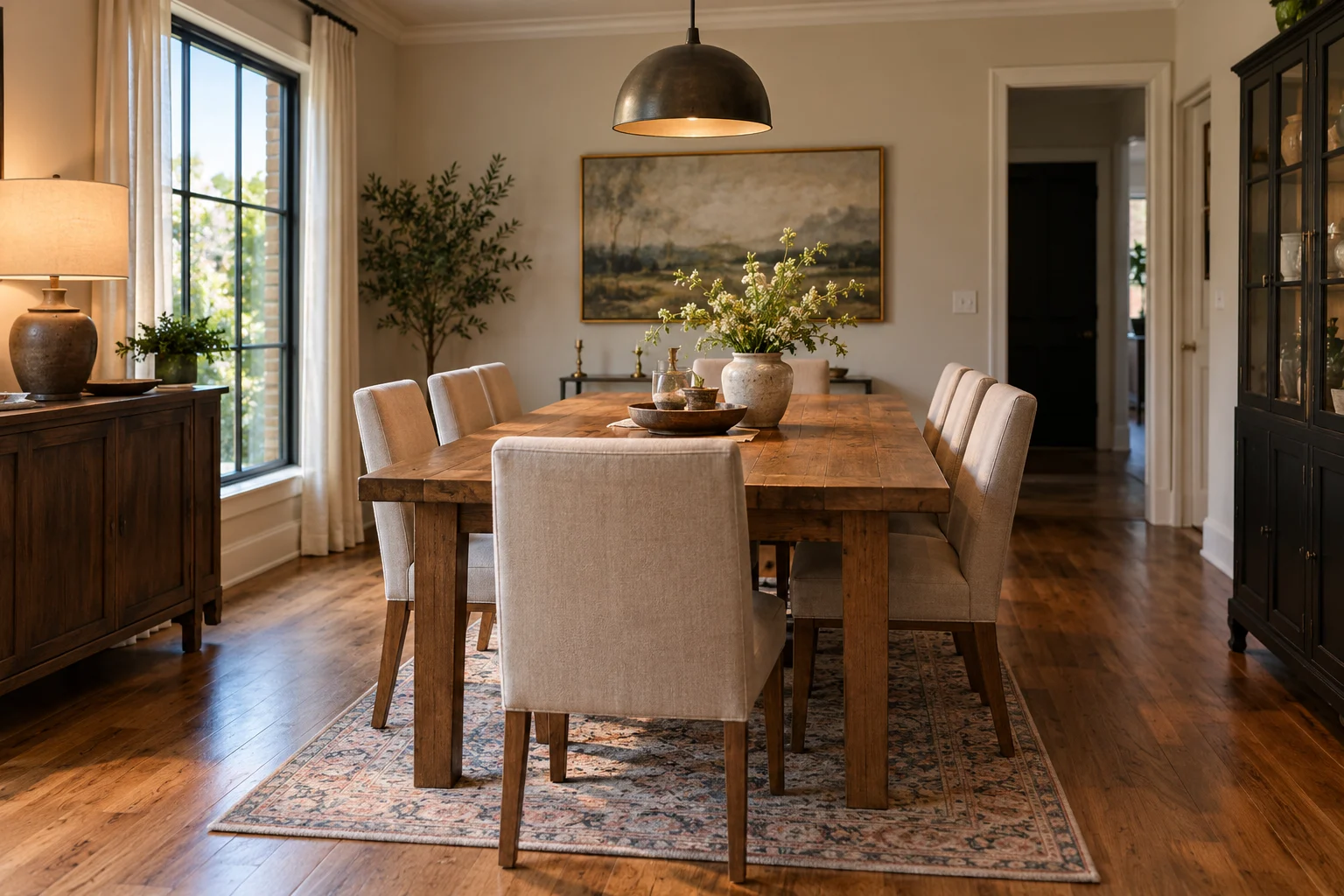
Dining room design mistakes can make even a beautiful home feel cramped, uncomfortable, or visually unbalanced. From choosing the wrong dining table size to installing harsh lighting or using an undersized area rug, small design decisions can have a significant impact on how a dining space looks and functions.
In 2026, dining room design is increasingly focused on creating inviting spaces that feel personal, comfortable, and practical for everyday meals as well as special occasions. Richer color palettes, natural materials, layered textures, and statement lighting are among the looks receiving attention from interior designers. However, following every trend is less important than creating a room that suits your home and lifestyle.
If you are planning a dining room makeover or refreshing your existing space, avoiding these seven common dining room design mistakes can help you achieve a more functional and attractive interior without committing to an expensive renovation.
7 Dining Room Design Mistakes to Avoid
1. Choosing a Dining Table That Is Too Large for the Room
One of the most common dining room design mistakes is buying a table based on its appearance rather than the dimensions of the room. A large dining table may look impressive in a showroom, but it can make a smaller dining area difficult to navigate. Guests may struggle to pull out their chairs, while family members may have to squeeze past furniture to reach the kitchen or another part of the house.
Before purchasing a table, measure the available floor space, including the area needed for chairs and walkways. As a practical guideline, aim to leave approximately 36 inches between the table edge and nearby walls or furniture wherever possible. Busy walkways may require additional room, depending on the layout.
Consider a round table for a compact dining area, an extendable table for occasional entertaining, or a narrower rectangular design for a long room. The right choice should accommodate your usual number of diners without making the space feel crowded.
2. Using an Area Rug That Is Too Small
A dining room rug should visually anchor the table and chairs rather than appear like a small decorative mat beneath the furniture. An undersized rug is a frequent design problem because the chair legs can catch on its edges whenever someone sits down or stands up.
For a more balanced arrangement, choose a rug that extends approximately 24 inches beyond each edge of the dining table. This generally provides enough room for chairs to move without slipping off the rug. Measure with the chairs pulled out, and account for any extension leaves if you regularly enlarge the table for guests.
Material also matters. Low-pile rugs and flatweave designs are often easier to maintain in dining areas because crumbs are less likely to become trapped in thick fibers. Choose a pattern and color that complement the table, flooring, and surrounding decor while remaining practical for everyday spills.
3. Installing the Wrong Lighting
Lighting can transform a dining room, but a fixture that is too small, too large, or poorly positioned can disrupt the entire design. Another common mistake is relying on bright, cool-toned lighting that makes the room feel more like a workplace than a comfortable place to eat.
Center a pendant light or chandelier over the dining table rather than automatically placing it in the middle of the room. For a typical dining setup, the bottom of the fixture is often positioned about 30 to 36 inches above the tabletop, although ceiling height, fixture design, and sightlines should also guide the final placement.
Warm-white bulbs in the 2,700K to 3,000K range can help create a welcoming atmosphere. Adding a dimmer, wall sconces, or other indirect light sources provides greater flexibility, allowing the room to transition from bright family meals to relaxed evening dinners.
For long rectangular tables, a linear chandelier or a carefully arranged series of pendants may provide better coverage than a small, single fixture. The goal is to illuminate the table comfortably without creating glare or obstructing conversation.
4. Buying a Completely Matching Furniture Set
A matching dining table, chairs, sideboard, and display cabinet can create a coordinated look, but using the same finish and style for every piece may leave the room feeling predictable or overly staged. A dining space generally feels more personal when different materials and textures work together.
Instead of replacing an entire furniture set, consider introducing contrast through upholstery, wood tones, metal finishes, or decorative accessories. A natural wood table can pair well with upholstered chairs, while a contemporary sideboard can complement a more traditional dining table.
The key is to create visual connections between the pieces. Repeating a color, material, or finish in several places helps the room feel cohesive without making every item identical. Mixing styles thoughtfully can also be a practical way to keep cherished furniture while giving the space a more updated appearance.
5. Prioritizing Chair Appearance Over Comfort
Dining chairs can make a strong design statement, but uncomfortable seating can quickly undermine an otherwise attractive room. Chairs that are too wide, too tall, or poorly proportioned may also limit how many people can sit around the table comfortably.
Check the relationship between the chair seat and tabletop before purchasing furniture. Most standard dining tables are about 30 inches high, although individual designs vary. Allow enough room for diners’ legs, and make sure chair arms can slide beneath the table when necessary.
As a useful starting point, plan for approximately 24 inches of table-edge space per person. This helps provide room for place settings and comfortable dining, although the ideal spacing depends on the table shape, chair dimensions, and size of the diners.
If you have a small dining area, streamlined chairs without bulky arms may preserve valuable space. Upholstered seating can add comfort and softness, while durable, easy-to-clean fabrics may be more suitable for households with children or frequent entertaining.
6. Overcrowding the Room With Decor
Too many accessories can make a dining room feel cluttered and reduce the space available for serving food and enjoying meals. Oversized centerpieces, crowded sideboards, excessive wall decorations, and too many decorative objects can compete with the dining table instead of enhancing it.
Start with a clear focal point, such as the dining table, a distinctive light fixture, or a piece of artwork. Build the surrounding decor around that feature rather than attempting to make every item stand out.
Keep centerpieces low enough to allow diners to see one another across the table. Leave sufficient surface space for plates, serving dishes, and drinks. On a sideboard, group a few meaningful objects together and leave some empty space to maintain visual balance.
Mirrors, artwork, plants, and textured accessories can add character, but their scale should suit the room. In smaller dining spaces, a few well-chosen pieces are often more effective than a large collection of decorative items.
7. Following Trends Without Considering Your Lifestyle
Design trends can provide inspiration, but choosing furniture, paint colors, or finishes simply because they are popular can lead to a room that does not suit your everyday needs. The dining room should reflect how you actually use the space, whether that means hosting dinner parties, eating quick weekday meals, helping children with homework, or entertaining extended family.
Current 2026 design directions include richer colors, natural wood, tactile wall finishes, sculptural lighting, and more intentional dining spaces. These elements can add warmth and personality, but they do not need to be used together or adopted in their entirety.
For a timeless foundation, consider furniture with durable construction, a color palette that works with the rest of your home, and materials that are appropriate for your household. You can introduce seasonal colors or emerging trends through relatively easy-to-change elements such as cushions, table linens, artwork, and decorative accessories.
It is also worth considering the upkeep required by each material. Delicate upholstery, highly textured rugs, and surfaces that stain easily may require more maintenance than your household can comfortably manage. A successful dining room balances appearance, durability, and convenience.
How to Create a Dining Room That Looks Good and Works Well
Before making major changes, evaluate the dining room as a complete space. Begin by measuring the room and planning the arrangement of the table, chairs, storage furniture, lighting, and rug. Check that doors can open freely and that people can move between the dining area and adjacent rooms without difficulty.
Next, choose a clear design direction. Natural wood, warm neutral colors, layered lighting, and a combination of contrasting textures can create a welcoming look, while deeper colors and statement fixtures can make the room feel more dramatic. Neither approach is universally better; the right choice depends on the amount of natural light, the size of the room, and your personal preferences.
Pay attention to the details that make everyday use easier. Select chairs that remain comfortable during longer meals, choose a rug that accommodates moving chairs, and use lighting that can be adjusted for different occasions. If storage is needed, a suitably sized sideboard can keep tableware and serving accessories within reach without obstructing walkways.
You do not need to replace all your furniture to improve the dining room. Repositioning the table, changing a light fixture, updating the rug, or introducing complementary textiles may be enough to create a noticeable improvement. Addressing functional problems first also helps ensure that any decorative updates contribute to a room that works better as well as looks better.
The Bottom Line
The most effective dining room designs combine visual appeal with comfort, proportion, and practical use. Avoiding oversized furniture, undersized rugs, poorly planned lighting, uncomfortable chairs, excessive decor, and trend-driven purchases can help you create a space that feels welcoming and balanced.
As dining room design continues to emphasize warmth, texture, and purposeful spaces in 2026, the best approach is to adapt new ideas to your own home rather than follow a fixed set of rules. With careful measurements, thoughtful furniture choices, and a cohesive design plan, even a modest dining area can become a comfortable place for everyday meals and memorable gatherings.