
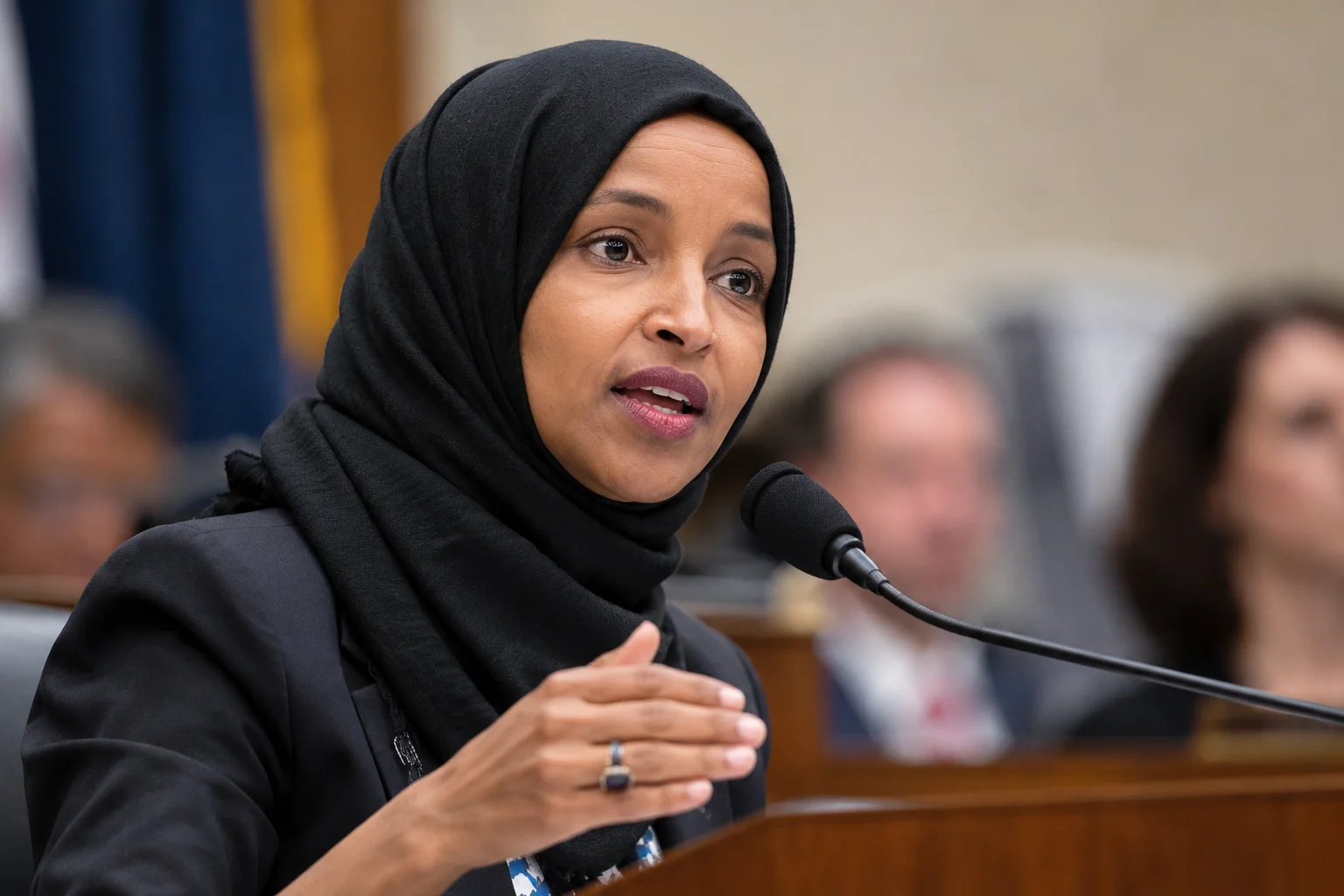
Former President Barack Obama has criticized the federal investigation involving Democratic Rep. Ilhan Omar of Minnesota, intensifying the political debate surrounding a search of her Washington, D.C., residence. Omar’s attorneys are demanding the return of property seized by investigators, while the Justice Department maintains that authorities complied with court orders.
WASHINGTON, October 19, 2026 — Congresswoman Ilhan Omar is facing renewed national attention after federal agents searched her Washington, D.C., home on October 12 as part of an investigation reportedly focused on her family’s immigration records. The development has drawn criticism from Democratic lawmakers and raised questions about the timing of the investigation, which began less than a month before the November midterm elections.
Omar, a Democrat representing Minnesota’s 5th Congressional District, has denied wrongdoing and described the search as an attempt to intimidate a political opponent. The investigation remains ongoing, and authorities have not publicly announced criminal charges against her in connection with the probe.
Barack Obama Criticizes the Federal Investigation
Former President Barack Obama publicly criticized the Trump administration’s handling of the investigation on Sunday, October 18. He argued that using the power of the federal government to target elected officials because of their political views would threaten democratic principles.
Obama said the investigation should concern Americans regardless of their political affiliation or opinions about Omar. His intervention brought additional national attention to the case and added to the criticism from Democrats who have questioned whether the search was politically motivated.
Obama also drew attention to the broader implications of allowing federal law enforcement powers to be used against political critics. He warned that normalizing such actions could undermine public confidence in democratic institutions and create a precedent that future administrations might follow.
The former president has previously faced false claims questioning his American citizenship, making the controversy surrounding Omar’s immigration history particularly relevant to his latest public comments.
Omar’s Lawyers Demand the Return of Seized Property
Omar’s legal team has asked the Justice Department to return property seized during the search of her Washington residence. In a letter sent to federal officials on October 16, her attorneys challenged the legal basis for the search and alleged that investigators had failed to follow safeguards intended to protect the constitutional rights of a sitting member of Congress.
The attorneys also requested that authorities preserve audio and video recordings associated with the operation. They argued that the government’s actions could interfere with congressional independence and raised concerns about the timing of an investigation involving a candidate shortly before an election.
The Justice Department rejected the allegations made by Omar’s lawyers. A department spokesperson said investigators and law enforcement partners had complied with the applicable court orders and legal obligations. The department also characterized the defense letter as containing inaccurate allegations.
The competing statements reflect a significant legal dispute over how the search was conducted and whether officials followed the restrictions established by the judge who authorized it. The full scope of the investigation and the evidence supporting the search have not been publicly disclosed.
What Is the Investigation Into Ilhan Omar About?
Reporting by Reuters indicates that federal investigators are examining questions related to immigration and naturalization paperwork from Omar’s early years in the United States. The sealed search warrant reportedly identified potential offenses involving conspiracy, false statements on immigration documents and immigration fraud.
Investigators are reportedly examining whether information supplied by Omar or members of her family during immigration or naturalization procedures was inaccurate. However, the precise allegations and the evidence investigators have gathered remain unclear because the investigation is ongoing and key records have not been made public.
Omar was born in Somalia and came to the United States in the 1990s after fleeing the country’s civil war and spending time in a refugee camp in Kenya. She became a U.S. citizen in 2000. She has repeatedly rejected allegations about her immigration history and has maintained that she has done nothing wrong.
According to previous reporting by The Washington Post, a review of questions about Omar’s immigration records during the Trump administration’s first term did not identify sufficient evidence to pursue a full investigation at that time. The current probe represents a renewed examination of the issues.
The possibility of denaturalization has also entered the political discussion. Under U.S. law, citizenship obtained through naturalization can be revoked in certain circumstances, including when a court determines that it was unlawfully obtained or procured through material misrepresentation. Any such action would require the government to establish the applicable legal grounds; the existence of an investigation alone does not establish that those grounds have been met.
Why the Timing of the Search Is Controversial
The October 12 search has attracted scrutiny because it occurred shortly before the November 3, 2026, midterm elections. Omar is seeking another term in Minnesota’s 5th Congressional District, and the investigation has become part of the wider political debate between the Trump administration and its Democratic opponents.
The Justice Department has traditionally exercised caution with investigative steps involving political candidates near elections, particularly when those actions could become public and potentially affect the electoral process. This practice is commonly associated with an informal 60-day period before an election, although its application depends on the circumstances and it is not a blanket prohibition on every investigative action.
Questions have also emerged about the constitutional protections available to members of Congress. The Constitution’s Speech or Debate Clause protects legislative activity, and courts have recognized restrictions on government access to materials related to lawmakers’ legislative work. Reporting about the warrant indicates that procedures were ordered to screen potentially protected congressional materials.
Omar’s attorneys contend that federal authorities did not properly follow required safeguards. The Justice Department disputes their account, leaving the specific claims about compliance unresolved in public reporting.
Trump Administration’s Position and Omar’s Response
President Donald Trump has repeatedly criticized Omar, including questioning aspects of her background and immigration history. After the search, Trump told reporters that he had nothing to do with the operation and said the matter was up to the Justice Department.
Omar’s office has described the search as an abuse of federal power and argued that it fits a broader pattern of political hostility toward the congresswoman. Omar has said she will not be silenced by the investigation.
The Justice Department, meanwhile, has defended the legal process surrounding the search. Officials have not publicly provided a full account of the evidence under investigation, and the government’s position is that the legal procedures were followed.
That distinction is important: the existence of a court-authorized search does not establish that a person committed a crime, just as a subject’s denial does not determine the outcome of an investigation. The allegations, legal challenges and official explanations will need to be evaluated on the available evidence and through the applicable legal process.
What Happens Next?
The next developments are likely to depend on the Justice Department’s response to Omar’s lawyers, any further court proceedings over the seized property and the release of additional information about the investigation. The extent to which investigators can examine seized materials may also depend on the safeguards governing records connected to Omar’s legislative duties.
The investigation has become a significant political issue in the run-up to the midterm elections, with Democrats warning against the use of federal authority for political purposes and the administration maintaining that law enforcement must be able to investigate potential violations of federal law.
As of October 19, the underlying allegations remain unresolved in public. Omar continues to deny wrongdoing, her attorneys are challenging the search, and the Justice Department has defended its compliance with court orders. Further legal filings or official statements may clarify the evidence, the scope of the investigation and what steps investigators intend to take next.